

Spring in Michigan is beautiful, the trees are blooming, the sun sticks around a little longer, and parks in Canton and Ann Arbor start filling up again.
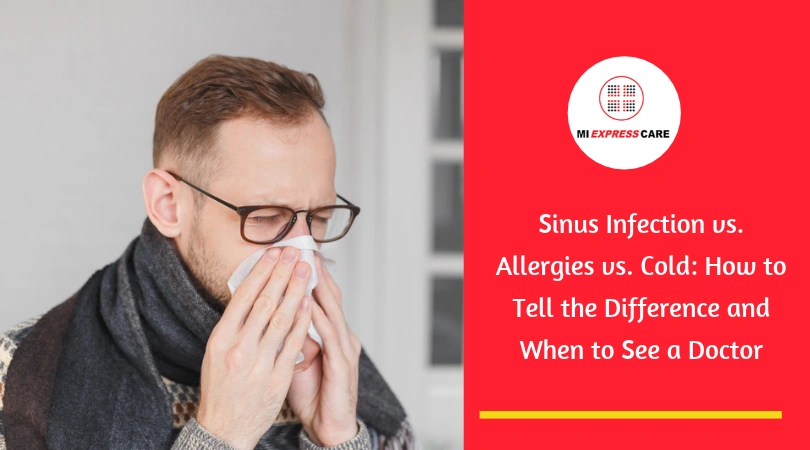
But along with the fresh air comes something less welcome: sniffles, sneezing, and stuffy noses.
Around this time every year, patients ask the same question: “Is it allergies… or am I getting sick?”
It’s a fair question. The symptoms can overlap, and when you’re tired of blowing your nose, you just want answers. Let’s break down what’s really going on so you can feel better faster.
Michigan’s spring weather creates the perfect storm for allergy flare-ups. Here’s why symptoms spike this time of year:
Trees release large amounts of pollen early in the season.
Grass pollen follows soon after.
Temperatures swing wildly from warm to chilly.
We all spend more time outside after months indoors.
That pollen floating through the air? Your immune system may treat it like an intruder, and that’s when spring allergy symptoms kick in.
Seasonal allergies don’t come from a virus. They happen when your body overreacts to harmless things like pollen.
Here’s what allergy symptoms usually look like:
Clear, watery runny nose
Frequent sneezing (sometimes in bursts)
Itchy eyes, nose, throat, or even ears
Post-nasal drip
Nasal congestion
Symptoms that stick around for weeks
No fever
One of the biggest clues when asking, “How to tell if it’s allergies or a cold?” is itching. Allergies often cause persistent itchiness in the eyes and throat, something colds rarely do.
Another key sign: Symptoms worsen outdoors and improve indoors or after taking antihistamines.
Colds are caused by viruses, and they’re contagious. They also follow a more predictable timeline.
Cold symptoms often include:
Thicker yellow or green mucus
Mild body aches
Low-grade fever
Fatigue
A cough
Symptoms that improve within 7–10 days
Colds usually start gradually. And unlike allergies, colds don’t typically cause itchy eyes. If someone at home, school, or work has been sick recently, that’s another clue you might be dealing with a virus instead of springtime allergies.
| Feature | Seasonal Allergies | Common Cold |
|---|---|---|
| Onset | Sudden, often triggered by outdoor pollen exposure | Gradual, develops over several days |
| Duration | Persistent, may last weeks to months during pollen season | Self-limited, typically resolves within 7–10 days |
| Nasal Discharge | Clear and watery | Often thicker; may become yellow or green |
| Ocular/Nasal Itching | Frequently present | Rare |
| Fever | Not Typical | Possible low-grade fever |
| Body Aches | Uncommon | Often mild to moderate |
If you’re still wondering how to tell if it’s allergies or a cold, timing and triggers usually give you the answer.
Most mild symptoms can be managed at home. But there are times when it’s smart to get checked out. You should seek medical care if you have:
Fever over 101°F
Symptoms lasting longer than 10 days
Severe facial or sinus pressure
Wheezing or shortness of breath
Symptoms not improving with over-the-counter medications
A history of asthma
If allergies are the concern, small daily habits can make a big difference. Try these practical steps:
Shower and change clothes after spending time outdoors
Keep windows closed during high-pollen days
Use a HEPA air filter at home
Start allergy medications early in the season
Check local pollen counts before planning outdoor activities
Wash bedding weekly in hot water
Managing exposure is often just as important as taking medication.
Self-diagnosing can delay proper treatment. While allergies and colds share symptoms, the treatments differ. For example:
Antihistamines help allergies but not viral infections
Decongestants may temporarily relieve cold symptoms
Untreated allergies can develop into sinus infections
Recurrent symptoms may require allergy testing
Early evaluation leads to faster relief and prevents complications, especially during peak spring allergy season in Michigan.
Spring should mean walks outside, not constant congestion.
Understanding the difference between allergies and a cold helps you treat the root cause instead of just masking symptoms. And if your symptoms feel stronger than usual, last longer than expected, or keep returning every year, don’t ignore them.
Relief starts with clarity.
Spring congestion and sinus pressure can disrupt work, school, and daily life. At MI Express Urgent Care, we provide same-day evaluations to determine whether your symptoms are allergy-related or viral, helping you start the right treatment right away.
Book an appointment today for clear answers and efficient care.
Persistent nasal inflammation from untreated allergies can block sinus drainage, allowing bacteria to grow and potentially develop into a secondary sinus infection.
COVID often includes fever, body aches, and possible loss of taste or smell. Allergies cause itching without fever, while colds are shorter and contagious.
Lying down increases post-nasal drainage, and indoor allergens like dust mites can intensify congestion, coughing, and sinus pressure during nighttime hours.
Spring allergy symptoms can persist for several weeks or months, depending on pollen levels and individual sensitivity to seasonal environmental triggers.
Allergies are immune system responses to environmental triggers like pollen and cannot spread from person to person like viral infections.