


You’ve probably tried to “do everything right,” eating better, staying active, cutting back where you can. And yet, the results don’t always match the effort.
This is where the question shifts. It’s no longer just about diet and exercise for weight loss, but whether your body is responding the way it should.
For some people, consistency is enough. For others, something underneath, metabolism, hormones, or a medical condition, can slow things down. This is usually when people start looking into medical weight loss, when effort alone doesn’t explain the outcome.
Medical weight loss isn’t built around trends or guesswork. It starts with understanding how your body is functioning and what might be limiting progress.
Instead of asking “What diet should I follow?”, the focus becomes “What is preventing results?”
A structured medical weight loss treatment plan may involve:
Prescription support, when appropriate
Testing for hormonal or metabolic imbalances
Nutrition guidance tailored to your body, not a generic plan
Regular check-ins to track progress and make adjustments
The process is more deliberate. If something isn’t working, it’s adjusted rather than pushed through.
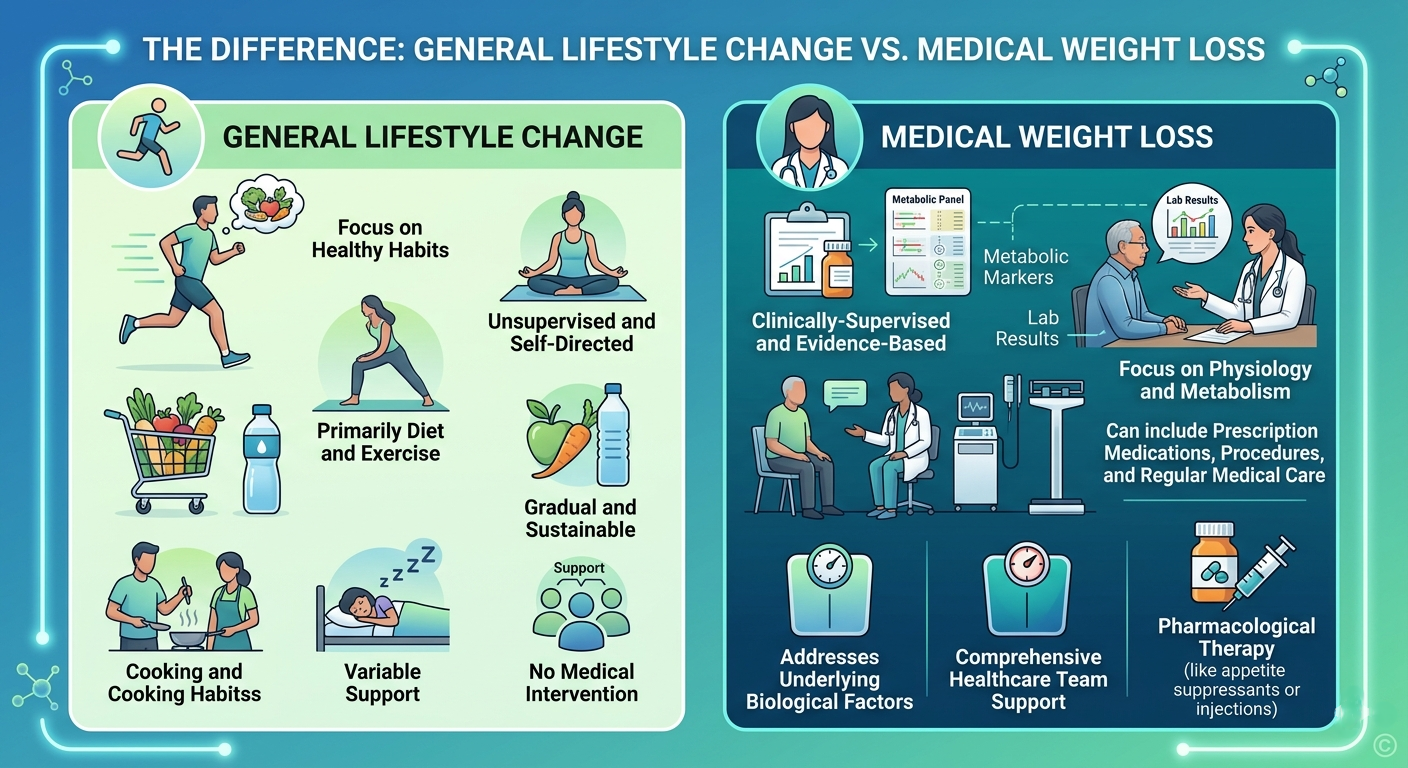
Personalization: Diet and exercise plans are often broad. Medical weight loss is specific, built around your health, not averages.
Speed of Results: Lifestyle changes alone can take time. With medical guidance, progress may be more steady and noticeable because underlying barriers are addressed.
Support System: On your own, it’s easy to second-guess what’s working. With medical support, there’s ongoing direction, which removes a lot of that uncertainty.
Related: What Contributes More to Healthy Aging: Exercise or Diet?
This is often the missing piece. A medical approach can uncover:
Hormonal imbalances
Slower metabolic function
Conditions that make weight loss more difficult
Without addressing these, effort doesn’t always translate into results.
A lifestyle-focused approach may be enough if:
Weight gain is recent or mild
You’re seeing at least some progress with consistency
There are no known medical concerns
You’re comfortable with a slower, steady pace
You may want to look at medical support more closely if:
You’ve been consistent but aren’t seeing results
Weight keeps coming back after initial loss
You’re dealing with conditions like thyroid issues, PCOS, or diabetes
You feel like your body isn’t responding the way it used to
Related: Diabetes & Weight Loss: Transform Your Health with Lifestyle Changes
In most cases, the most effective approach isn’t choosing one over the other. Medical guidance helps address what’s happening internally, while nutrition and movement support long-term stability. Together, they create a more realistic and sustainable plan.
Trying to push harder without understanding what’s going on can lead to setbacks:
Cutting calories too aggressively, which slows metabolism
Losing muscle instead of fat
Regaining weight once routines become difficult to maintain
Missing underlying health issues altogether
If you’re unsure, consider this:
Have you followed structured plans but hit a plateau?
Does weight loss feel harder now than it used to?
Are you dealing with fatigue, hormonal changes, or other health concerns?
If the answer is yes to any of these, a medical evaluation can offer clarity.
A medically guided plan doesn’t replace effort, it makes that effort more effective. Weight loss programs are designed to:
Identify what may be limiting progress
Create a plan based on your body’s needs
Provide ongoing support and adjustments
If weight loss has felt harder than it should, it’s worth considering that the issue may not be effort alone.
Diet and exercise for weight loss are still essential, but they don’t always tell the full story. When progress stalls, looking deeper can change the direction entirely.
Weight loss is not always a reflection of effort alone. When results change despite consistency, it often points to factors that need closer evaluation. At MI Express Urgent & Primary Care, the focus is on understanding those factors and creating a plan that supports steady, measurable progress.
Schedule an appointment to explore a more structured approach to weight loss.
Medical weight loss is personalized and supervised, while diet and exercise typically follow general, self-directed plans.
Hormonal, metabolic, or underlying health conditions may be affecting how your body responds.
Yes, when guided by healthcare professionals, it focuses on safe and structured progress.
Those who struggle despite consistent effort or have medical conditions affecting weight.
Yes, combining both often leads to more consistent and sustainable outcomes.