


Joint and tendon pain does not always start with a major injury. Sometimes it builds slowly, stiffness in the knee, soreness in the shoulder, or a tendon that never quite settles down. You try rest, anti-inflammatory medication, maybe even physical therapy. It helps for a while, but the discomfort keeps coming back.
At that point, surgery is often mentioned as the next step.
While surgery can be necessary in certain cases, many patients understandably hesitate. An operation means anesthesia, recovery time, and a temporary pause on work, exercise, and normal routines. Because of this, more people are looking into options that support natural healing therapy before committing to a surgical procedure.
One of the most discussed options today is PRP therapy, also known as plasma healing. Before you decide on surgery, here’s what to know about PRP and how it supports natural healing.
Surgery has advanced significantly and can provide excellent outcomes. However, it also comes with important considerations:
Surgical risks, including infection or complications
Recovery periods that may last weeks or months
Physical therapy requirements
Time away from work or daily activities
Financial costs and insurance approvals
For active adults especially, extended downtime can be disruptive. Many patients prefer to explore less invasive solutions first, particularly when dealing with early joint degeneration, chronic tendon irritation, or moderate arthritis.
This growing interest has led to increased awareness of innovative medical treatments that focus on helping the body repair itself rather than removing damaged tissue.
Both surgery and PRP therapy aim to reduce pain and improve function, but their approaches are very different.
Surgery physically repairs or replaces damaged tissue. Depending on the condition, this might involve trimming torn cartilage, reconstructing ligaments, or replacing part of a joint.
This approach typically includes:
In cases of severe structural damage, surgery may be the most effective and appropriate solution.
PRP healing takes a biological approach instead of a mechanical one.
The process begins with drawing a small amount of your blood. That sample is placed in a centrifuge to separate and concentrate the platelets. Platelets contain growth factors, natural substances that help regulate inflammation and support tissue repair.
The concentrated platelet-rich plasma is then injected directly into the injured area.
PRP therapy is:
Rather than removing or replacing tissue, PRP encourages your body to strengthen and repair it
One of the key PRP treatment benefits is that it uses your own blood components. No artificial implants or foreign substances are introduced.
Because of this:
This is why PRP is often described as a natural healing therapy. It works by amplifying your body’s existing repair process.
Instead of masking symptoms temporarily, the goal of PRP healing is to improve the environment around the injured tissue, reducing inflammation and encouraging gradual recovery.
Improvement is not usually instant. The process unfolds over weeks as the tissue responds to the concentrated growth factors.
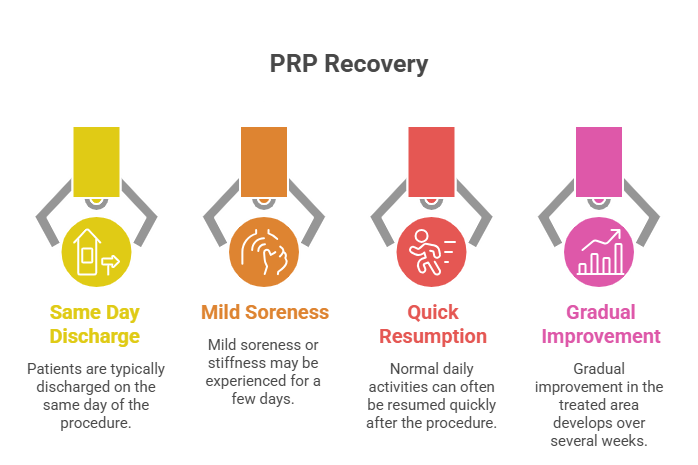
Recovery is typically much simpler compared to surgery. After the procedure:
Patients go home the same day
Mild soreness or stiffness may occur for a few days
Normal daily activities are often resumed quickly
Gradual improvement develops over several weeks
Some providers recommend temporarily modifying high-impact activities to give the tissue time to respond.
Unlike surgical recovery, PRP does not typically require crutches, surgical dressings, or extended rehabilitation programs. That said, results vary depending on the severity of the condition and overall health.
PRP therapy is commonly considered for patients with:
Early to moderate joint degeneration
Tendon inflammation without complete tears
Chronic overuse injuries
Mild to moderate osteoarthritis
It is especially appealing to patients who want to stay active and avoid or delay surgery. For individuals who are not yet candidates for joint replacement but continue to experience discomfort, PRP can offer a middle-ground solution.
A thorough medical evaluation is essential to determine whether the condition is appropriate for PRP healing.
While PRP can be helpful in many situations, it is not a universal solution.
It may not provide sufficient improvement in cases involving:
In these cases, surgical intervention may offer the most predictable outcome. An honest discussion about expectations and alternatives helps ensure patients choose the right path.
If you are considering PRP therapy, it is helpful to discuss:
Making an informed decision ensures that PRP fits into a broader, personalized care plan.
PRP therapy gives patients another way to move forward when pain persists but surgery feels premature. Instead of altering your anatomy, it supports your body’s ability to repair and strengthen injured tissue. For the right candidate, it can reduce discomfort, improve function, and create space to heal, without the recovery demands that often come with surgical procedures.
Persistent joint or tendon pain doesn’t always require surgery. PRP therapy at MI Express Urgent & Primary Care uses your body’s own healing response to reduce inflammation and support tissue recovery, with minimal downtime.
Request your PRP consultation today and discover a smarter way to heal.
PRP results vary by condition and severity, but many patients experience pain relief and improved function for several months to over a year.
PRP is considered regenerative medicine because it uses concentrated platelets and growth factors from your own blood to stimulate tissue repair.
Light activities often resume within a few days, while higher-impact exercise is gradually reintroduced over several weeks based on provider guidance.
Since PRP uses your own blood components, it is generally well tolerated in older adults, though overall health and medical history should be evaluated.
In early to moderate joint degeneration, PRP may reduce pain and improve mobility, potentially postponing the need for joint replacement in some patients.