MI Express Urgent & Primary Care
44237 Michigan Ave Suite B, Canton, MI 48188
Monday - Friday : 9 AM - 7 PM
Saturday - Sunday : 10 AM - 6 PM
MI Express Urgent & Primary Care
80 S Zeeb Rd Unit 101 B, Ann Arbor, MI 48103
Monday - Friday : 9 AM - 7 PM
Saturday - Sunday : 10 AM - 6 PM
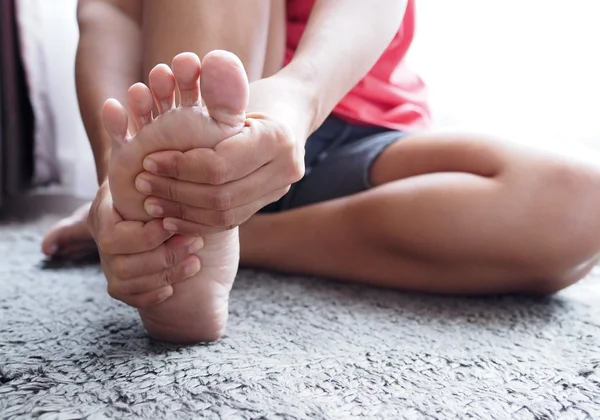
A few things genuinely help while you're deciding whether to come in: calf and arch stretches done before you get out of bed, shoes with real heel cushioning and arch support instead of flat or worn-out soles, and icing the heel after activity rather than before it. Rolling the arch of your foot over a frozen water bottle for a few minutes each evening is another simple habit worth trying. If you've kept this up for a couple of weeks with no real improvement, that's usually the point where in-office treatment makes the difference. Self-care alone can't.
Shockwave therapy was developed specifically for this kind of tendon and connective-tissue pain, which is part of why it tends to work well for plantar fasciitis. It's non-invasive, with no needles or incisions, delivered over a short series of in-office sessions, and there's no downtime afterward, which matters when standing and walking are already part of your job.
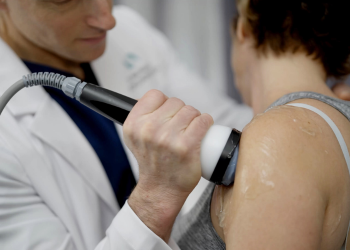
targets the irritated tissue directly and has a strong track record specifically for plantar fasciitis. No referral is needed to get started.
Learn more about shockwave therapy.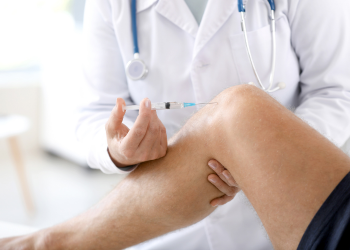
a quick option worth knowing about if you're dealing with a particularly painful flare and need relief fast, whether on its own or alongside another treatment.
Learn more about steroid joint injections.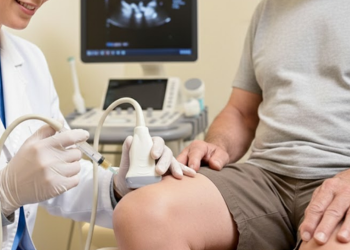
worth asking about if your fasciitis is chronic or keeps coming back, since it uses your own blood's healing platelets to support longer-term repair in the tissue.
Learn more about PRP therapy.
We see a steady stream of nurses, teachers, retail workers, and anyone else whose job keeps them on their feet all day, patients who genuinely can't take a week off to recover. Both our Canton and Ann Arbor locations offer walk-in visits and same-week scheduling built around that reality, led by Dr. Umayr Azimi, MD, dual board-certified in Internal Medicine and Obesity Medicine.
Book My AssessmentMost patients complete a short series of sessions scheduled about a week apart. Dr. Azimi will outline a specific plan for you after your evaluation.
Most patients feel pressure or mild discomfort during treatment rather than sharp pain. Any soreness afterward is typically brief and manageable.
Cost depends on your treatment plan and insurance coverage. Our team can walk you through pricing and payment options before you start.
Often yes, with some activity modification. Dr. Azimi will let you know what's appropriate based on how severe your symptoms are.
Coverage varies by plan and by which treatment is recommended. Our team can help verify your specific benefits and walk you through self-pay options if needed.