


Facial swelling, or facial edema, is far more than a morning inconvenience; it is a visible signal that your body’s internal equilibrium has shifted. Whether it is the result of fluid becoming trapped in the interstitial spaces of the skin or a localized inflammatory flare, swelling is the body’s way of broadcasting an underlying issue.
The causes exist on a vast spectrum, from simple postural fluid shifts after a night’s sleep to the rapid, high-stakes immune response of an allergic crisis. Because the skin of the face, particularly around the eyes and jaw, is uniquely elastic, it often serves as the first "warning light" for systemic disruptions like infection or organ dysfunction.
Let’s unpack what facial swelling really means, explore the most common causes, and help you decide when it’s time to seek care.
Facial swelling occurs when fluid accumulates in the tissues or when there’s inflammation or infection. It can affect a specific area, like one eye or cheek, or spread across the entire face.
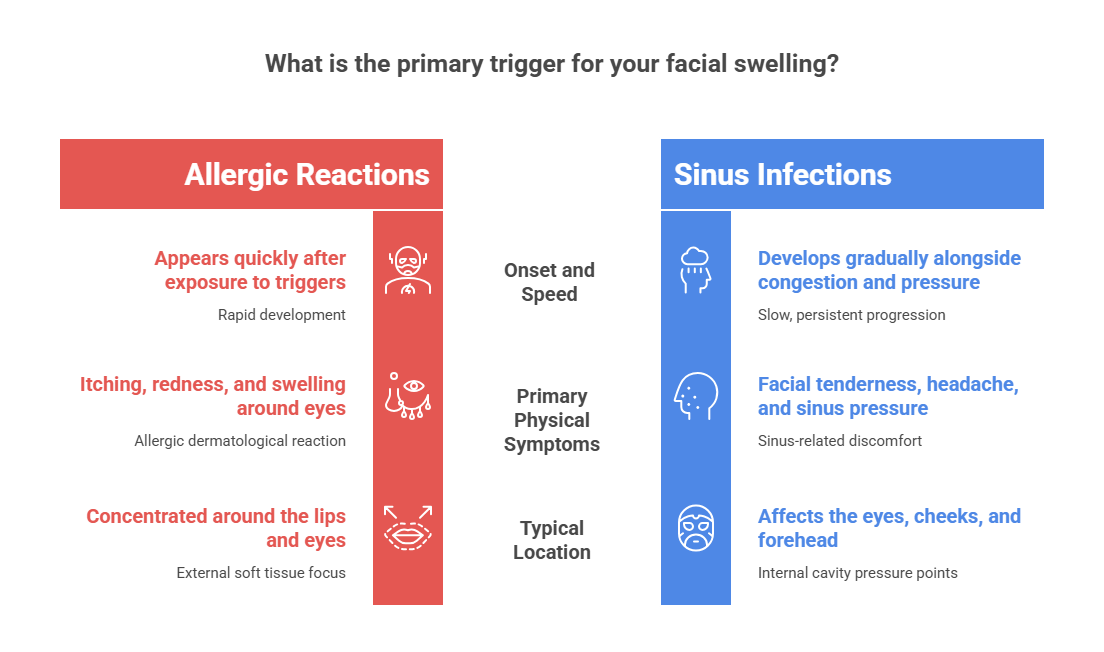
There are two main patterns:
Understanding this distinction is your first step toward the right solution.
A leading cause of sudden facial swelling, allergies can be triggered by food, medications, pollen, or insect bites. Swelling usually appears quickly, especially around the lips and eyes, and may be accompanied by itching or redness.
Sinusitis can cause pressure buildup, leading to swelling around the eyes, cheeks, and forehead. You may also experience congestion, headache, and facial tenderness.
A hidden dental issue can quickly become visible. Infections often cause localized swelling in the jaw or cheek, along with throbbing pain and sometimes fever.
A fall, bump, or even a minor hit can cause inflammation and bruising, resulting in temporary swelling. This usually improves as the body heals.
This condition involves deep swelling under the skin, often triggered by allergies or medications. It can affect the face, lips, and throat, and in severe cases, interfere with breathing.
Cellulitis is a bacterial infection that causes redness, warmth, pain, and swelling. It can spread quickly, so early treatment is important.
Sometimes, the explanation is simple. Common puffy face reasons include lack of sleep, dehydration, high sodium intake, or hormonal changes. This type of swelling is usually mild and temporary.
Blocked or infected salivary glands can cause swelling near the jawline or cheeks, often becoming more noticeable while eating.
Persistent swelling may be linked to conditions like kidney disease, thyroid disorders, or autoimmune issues. These cases require proper diagnosis and long-term management.
Some symptoms signal urgency. Seek immediate medical care if you notice:
These may indicate a severe allergic reaction or serious infection.
You don’t need to panic over every case, but don’t ignore ongoing symptoms either. See a doctor if:
Never self-treat a swollen face for more than a day or two without knowing what's causing it.
To identify the cause, your healthcare provider may:
Accurate diagnosis is essential for effective treatment.
Treatment varies depending on the cause:
Choosing the right face swelling treatment ensures faster relief and better outcomes.
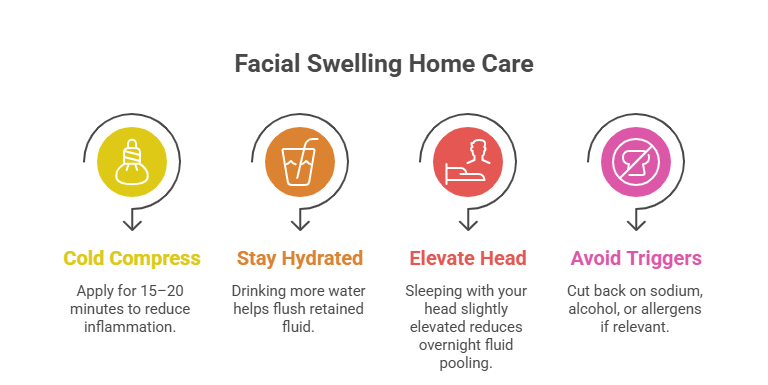
For minor puffiness with a clear, benign cause:
A swollen face is your body's way of flagging a problem. Sometimes it's minor, a bad night's sleep, too much sodium, a bump. Other times, it's your immune system in overdrive or an infection that needs treatment now.
The smartest thing you can do is pay attention. If something feels off, or the swelling isn't going away, get it checked. Early evaluation almost always leads to faster, easier treatment, and keeps small problems from becoming big ones.
It’s easy to dismiss a swollen face as temporary, but when the cause isn’t clear, waiting can make things worse. Early evaluation helps identify whether it’s a minor issue or something that needs prompt treatment.
MI Express Urgent & Primary Care provides timely, accessible care to assess your symptoms and guide the right treatment, without long delays.
Walk in or book your visit today and get clarity on what your symptoms are telling you.
Sudden swelling is often due to allergic reactions, angioedema, infections, or medication-related responses.
Be concerned if it’s severe, persistent, painful, or associated with breathing issues, fever, or vision changes.
Yes, urgent care centers commonly treat infections, allergic reactions, and minor injuries causing swelling.
Mild swelling may resolve within 24–48 hours, while more serious causes may persist without treatment.
Cold compresses, hydration, and reducing salt intake can help. However, underlying facial swelling causes may require medical treatment.