


Medicine has come a long way from simply managing symptoms. Today, doctors are looking inward, quite literally, to find solutions. Regenerative medicine, which focuses on activating the body's own repair mechanisms, has gained serious ground over the last decade. And sitting right at the center of this movement is PRP therapy.
PRP, or Platelet-Rich Plasma therapy, takes something already inside you, your blood, and puts it to work in a more targeted, concentrated way. Whether you're dealing with a stubborn sports injury, chronic joint pain, or even hair thinning, PRP has become a go-to option for people who want results without jumping straight to surgery.
Let’s understand what PRP therapy is, how the process works, and, most importantly, what it can and cannot realistically treat.
PRP therapy is a medical procedure that uses a concentrated portion of your own blood to accelerate tissue healing. Your blood contains four main components: red blood cells, white blood cells, plasma, and platelets. Platelets are tiny cells that rush to the scene whenever there's an injury, they clot blood and release growth factors that signal the body to begin repairing damaged tissue.
In PRP therapy, the platelet concentration is significantly increased, sometimes three to five times higher than what's found in regular blood. This concentrated mix is what makes the treatment regenerative rather than just symptomatic. Instead of masking pain, it works toward actual tissue repair.
The procedure itself is relatively straightforward.
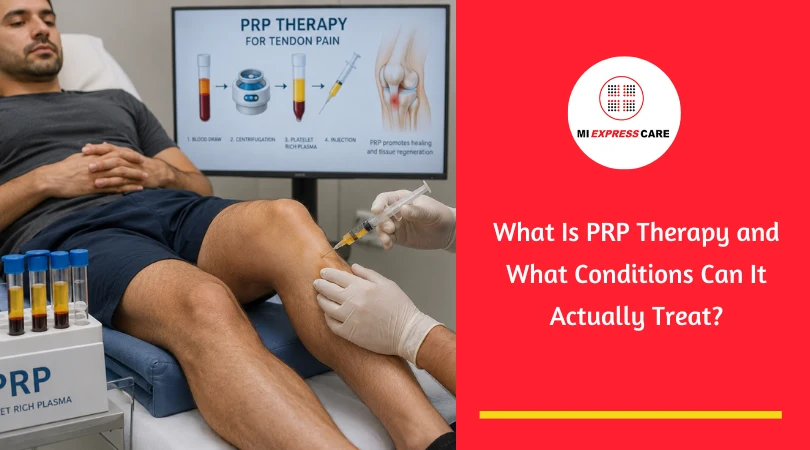
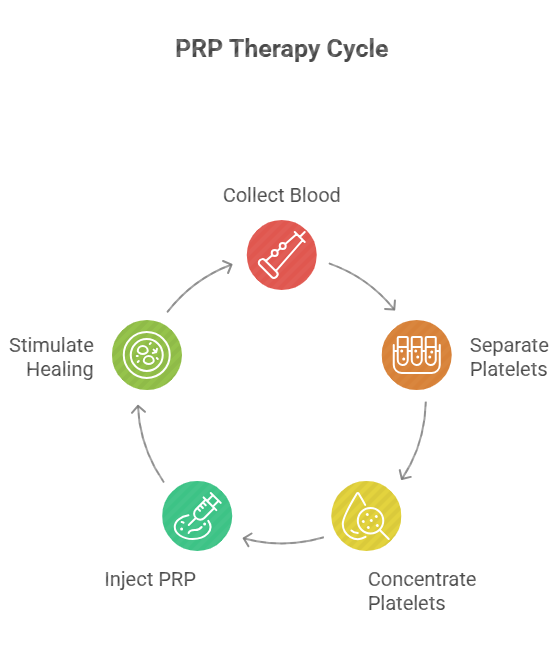
First, a blood sample is taken, usually from the arm. The sample is placed into a centrifuge, which spins the blood at high speed to separate its different layers. Once the platelets are concentrated, the PRP solution is prepared for injection.
The injection is placed directly into the injured or painful area. In many clinics, ultrasound guidance is used to improve accuracy.
The idea behind PRP therapy is simple deliver a higher concentration of healing platelets to tissue that may not be recovering efficiently on its own.
Growth factors released by the platelets are believed to support tissue repair, reduce inflammation, and encourage recovery in damaged muscles, tendons, ligaments, and joints.
PRP injections have shown measurable results for patients dealing with knee, shoulder, and hip pain, particularly those in early to moderate stages of osteoarthritis. The therapy works to reduce inflammation within the joint and improve overall mobility. Many patients report being able to resume daily activities with significantly less discomfort weeks after treatment.
Athletes frequently turn to PRP when recovering from muscle strains, partial ligament tears, and soft tissue damage. Because the therapy works with the body's natural biology, it can speed up recovery without the risks associated with steroid injections or surgical intervention.
Conditions like tennis elbow and Achilles tendonitis, which often resist conventional treatments, respond well to PRP. Tendons have a poor blood supply to begin with, which slows natural healing. Introducing concentrated growth factors directly into the affected tendon changes that equation.
For patients dealing with persistent back pain or recurring soft tissue injuries, PRP offers a path that addresses the root damage rather than layering medications on top of the problem.
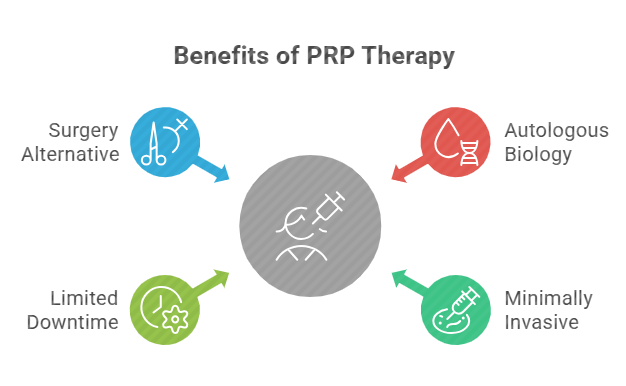
What draws most patients to PRP is how well it fits between doing nothing and undergoing surgery. Key advantages include:
Your own biology does the work: because the treatment uses your blood, the risk of rejection or allergic reaction is extremely low.
It's minimally invasive: no incisions, no general anesthesia, no lengthy hospital stay.
Downtime is limited: most patients return to light activity within a day or two.
It can delay or eliminate the need for surgery: for many mild to moderate conditions, PRP is a credible alternative.
Most appointments are completed within an hour. A typical visit includes:
Blood draw
Centrifuge processing
PRP preparation
Injection into the treatment area
Some patients need only one treatment, while others may require multiple sessions depending on the condition being treated.
PRP therapy recovery time is usually manageable compared to surgery. Most patients experience mild soreness or swelling for a few days after the injection. Strenuous exercise is often limited temporarily while healing begins.
Improvement usually happens gradually rather than immediately. Some patients notice changes within several weeks, while others may take a few months to experience the full effect. Results depend on several factors, including the location of the injury, overall health, and how the body responds to treatment.
PRP therapy is generally considered safe when performed by qualified medical professionals. Since the treatment uses the patient’s own blood, the risk of allergic reaction is extremely low. However, minor side effects can still occur. Possible PRP therapy side effects include:
Serious complications are uncommon but should still be discussed during consultation.
PRP therapy candidates are typically patients with mild to moderate injuries who want to explore non-surgical treatment options.
The treatment is often considered by:
A consultation and medical evaluation are necessary to determine whether PRP therapy is likely to help in a specific case.
PRP therapy continues to gain attention because it offers a different approach to healing. Instead of focusing only on symptom relief, the treatment aims to support the body’s repair process using its own biological resources.
For some patients, that can mean reduced pain, improved movement, and a better path to recovery. For others, the results may be limited.
The best way to know whether PRP therapy fits your condition is through a professional evaluation that considers your symptoms, imaging, activity level, and treatment goals.
Persistent joint pain, tendon injuries, and chronic inflammation can limit your mobility and affect daily life. PRP therapy offers a non-surgical treatment option designed to support healing using your body’s own natural repair process.
At MI Express Urgent & Primary Care, personalized PRP treatments help patients recover, move better, and get back to the activities they enjoy.
Schedule your consultation today and explore whether PRP therapy is right for you.
PRP therapy uses concentrated platelets from your own blood to help support tissue repair and healing after injury.
PRP therapy may help with joint pain, sports injuries, tendon problems, mild arthritis, and some chronic soft tissue conditions.
PRP therapy is generally safe when performed by trained providers, though results vary depending on the condition being treated.
Some patients notice improvement within a few weeks, while others may need several months for gradual healing and recovery.
PRP therapy is commonly available through orthopedic clinics, sports medicine specialists, regenerative medicine providers, and pain management practices.