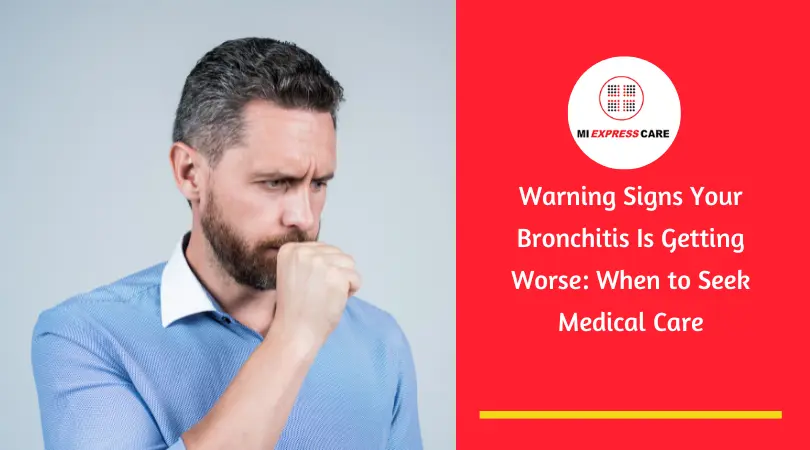



You thought it was just a cold. But the runny nose has dried up, the sore throat is gone, and yet, here you are, weeks later, still barking like a seal every time you try to take a deep breath.
Bronchitis is a tricky condition. It often arrives on the heels of a standard cold or flu, masking itself as just "the tail end" of being sick. Because of this, many people try to power through, assuming the coughing fits will fade on their own. While mild cases often do resolve with rest and tea, bronchitis can have a nasty habit of digging in its heels and escalating.
Recognizing the difference between a lingering annoyance and a serious medical issue is vital.
Here is how to tell when your body is waving a red flag that it needs help, and how urgent care can step in to get you back on your feet.
Bronchitis is essentially inflammation of the bronchial tubes, the highways that shuttle air in and out of your lungs. Most people are often confused or do not fully understand the real difference between bronchitis and the common cold, frequently assuming their symptoms are simply part of a lingering cold rather than a separate respiratory condition. This misunderstanding is common because both illnesses can begin with similar symptoms, which is why learning the difference between bronchitis vs. the common cold is important.
When a virus (or occasionally bacteria/irritants) attacks these tubes, they swell up and produce thick mucus to trap the invader. Your body’s natural reaction is to cough that mucus out. It’s a defense mechanism, but an exhausting one.
Generally, we see two types:
Acute Bronchitis: This is the temporary kind. It usually hits fast, often after a viral infection, and sticks around for a few weeks.
Chronic Bronchitis: This is a long-term inflammation, frequently seen in smokers or those with underlying lung issues, defined by a cough that lasts months at a time.
For most people reading this, you are likely dealing with the acute version, but you’re worried it’s turning into something more sinister.
Before spotting the warning signs, you need a baseline. Typical bronchitis symptoms often include:
A persistent cough
Production of clear, yellow, or green mucus
Chest discomfort or soreness
Fatigue
Mild fever or chills
While these symptoms are uncomfortable, they are generally manageable. However, if your bronchitis is not getting better, or if the intensity of these symptoms changes, it’s time to pay close attention.
If you are wondering, "Is my bronchitis getting worse?", look for these specific red flags.
1. Cough Lasting More Than 3 Weeks
A cough associated with acute bronchitis usually lingers for a week or two. If you are hacking away for three weeks or longer, it may indicate a secondary infection or that the inflammation has become chronic.
2. Shortness of Breath or Wheezing
Struggling to catch your breath is never a symptom to ignore. If simple activities like walking to the mailbox leave you winded, or if you hear a whistling sound (wheezing) when you breathe, your airways may be significantly narrowed.
3. High or Persistent Fever
A low-grade fever is common with viral infections. However, a fever above 100.4°F that lasts for several days or spikes suddenly after you thought you were recovering could be a sign of a bacterial superinfection or pneumonia.
4. Thick, Dark, or Bloody Mucus
While yellow or green mucus is common, a sudden change to very thick, dark brown, or bloody mucus is concerning. This can signal that bronchitis complications are developing.
5. Severe Chest Pain
Mild soreness from coughing is expected. However, sharp chest pain when you take a deep breath (pleurisy) or a feeling of tight crushing pressure requires immediate evaluation.
6. Extreme Fatigue
It is normal to feel tired, but if you are so exhausted you cannot get out of bed or function daily, your body is struggling significantly to fight the infection.
7. Symptoms That Keep Returning
If you recover and then get sick again shortly after, you may be stuck in a cycle of recurring bronchitis, which requires a different treatment approach than a one-time infection.
You shouldn't wait until you are gasping for air to see a doctor. You should seek medical attention if:
Your symptoms have lasted longer than three weeks.
You have underlying conditions like asthma, COPD, or a weakened immune system.
You experience a fever that won't break.
You notice blood in your mucus.
Bronchitis not getting better on its own is a valid reason to visit urgent care. Urgent care centers are equipped to evaluate these symptoms much faster than a primary care appointment might allow, and without the long wait times of an ER.
Going to urgent care allows for a comprehensive assessment of your lung health. Providers can offer:
Lung Assessments: Listening for wheezing, crackles, or decreased airflow.
Oxygen Checks: Pulse oximetry to ensure your blood oxygen levels are safe.
On-Site Testing: Chest X-rays to rule out pneumonia and lab tests to check for flu or COVID-19.
Prescriptions: While antibiotics don't kill viruses, they are necessary if you have developed a bacterial infection. Providers can also prescribe inhalers or steroids to open airways and reduce inflammation.
To stop bronchitis from getting worse, support your body’s recovery:
Rest and Hydrate: Water thins mucus, making it easier to cough up.
Stop Smoking: Smoke paralyzes the cilia in your lungs, preventing them from clearing mucus.
Use a Humidifier: Moist air soothes irritated airways.
Follow Orders: If prescribed medication, finish the full course.
For most warning signs of bronchitis, urgent care is the best choice. It offers walk-in availability and is more affordable than the Emergency Room.
Bronchitis often starts mild but can worsen quickly if ignored. Early treatment, careful monitoring, and timely medical attention are key to preventing serious complications. Don’t wait to seek care if your symptoms are worsening, urgent care can provide fast, effective evaluation and treatment.
Persistent coughing or breathing discomfort shouldn’t be ignored. At MI Express Urgent Care, we offer quick, reliable care to evaluate your symptoms and help prevent complications before they worsen.
Visit us today for compassionate care and clear answers, so you can get back to feeling your best.
Schedule your appointment today!
Untreated bronchitis can allow infection to spread deeper into the lungs, increasing the risk of pneumonia, especially in older adults or weakened immune systems.
Most bronchitis cases are viral, but worsening symptoms may require evaluation to determine whether bacterial infection or other treatment is needed.
If symptoms last longer than two to three weeks, worsen, or affect breathing, medical evaluation is recommended.
Symptoms may return if recovery is incomplete or triggers persist, especially in people with asthma, smoking history, or chronic lung conditions.
Viral bronchitis can spread for several days, particularly while coughing or sneezing, until symptoms improve and infection clears.