



Everyone gets tired. A rough week, poor sleep, a stretch of back-to-back obligations, normal tiredness has an obvious cause and clears up once you've had a chance to recover. Unexplained fatigue is different. It lingers. It doesn't respond to rest. It follows you into mornings when you slept eight hours and weekends when you did nothing demanding. That kind of fatigue isn't just your body asking for a break, it's often your body flagging something that deserves a closer look.
The good news: most causes of persistent fatigue are identifiable and treatable once you know what you're dealing with. The risk in brushing it off as stress or overwork is that it delays a diagnosis that, in many cases, is straightforward to address.
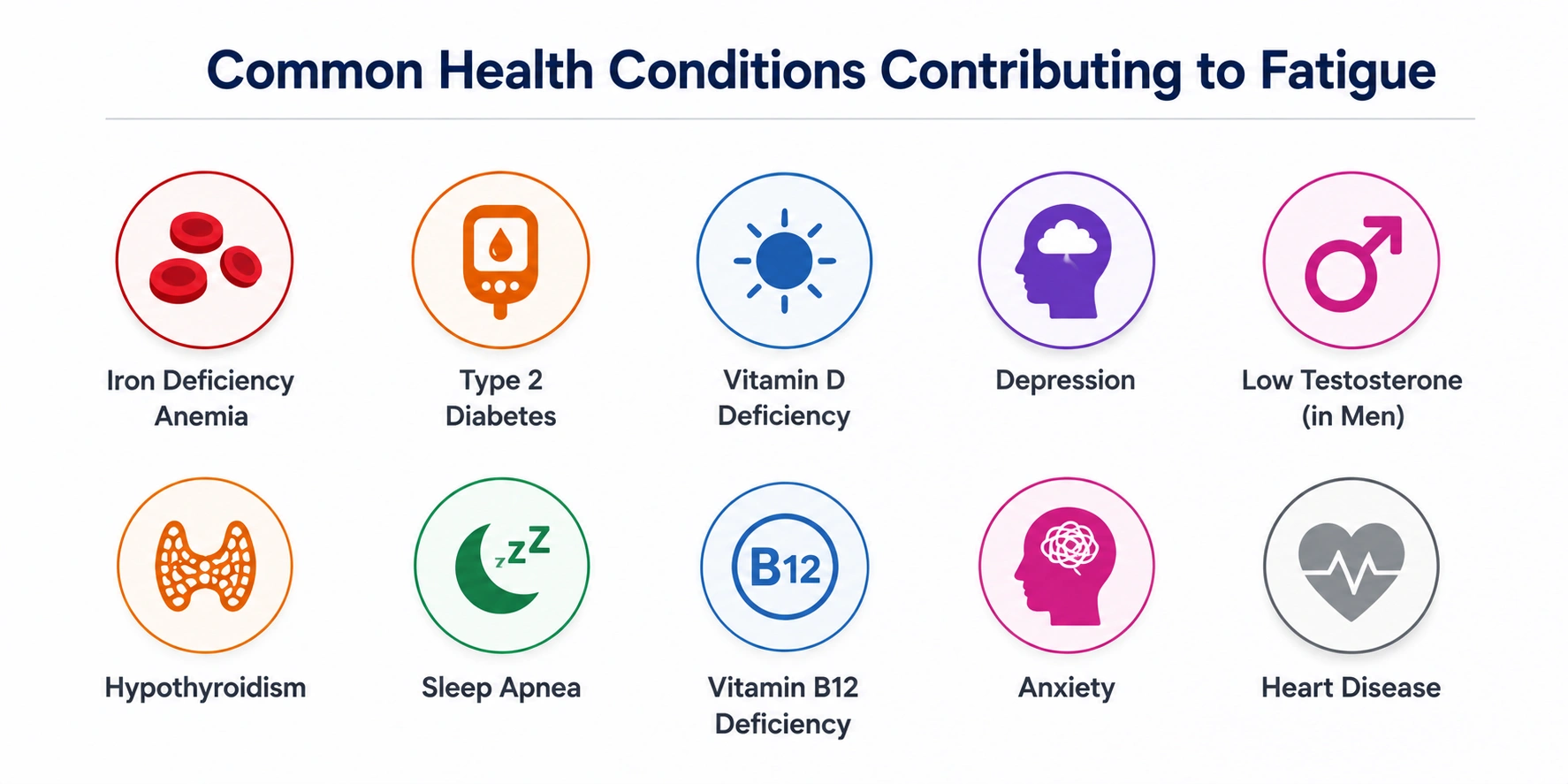
Here are 10 medical conditions worth ruling out, and when it's time to stop waiting and get checked.
Normal tiredness resolves with sleep and rest. Medical fatigue doesn't. It persists for weeks, interferes with everyday functioning, and doesn't improve no matter how much you sleep. Getting through a workday feels like an effort. Tasks that used to be automatic now require something extra you're not sure you have.
Fatigue is one of the most common reasons patients visit a primary care doctor, not because people are overly worried, but because it has a long list of possible causes. Many of those causes are easily missed without the right lab work.
When iron levels are low, red blood cells can't carry adequate oxygen to tissues, and the result is persistent, sometimes severe exhaustion. It's particularly common in women of reproductive age. Pale skin, dizziness, cold hands and feet, and shortness of breath on exertion are frequent companions.
The thyroid regulates metabolism. When it's underperforming, everything slows, including your energy levels. Fatigue from hypothyroidism is typically paired with weight gain, sensitivity to cold, dry skin, and gradual hair thinning. A simple TSH blood test is all it takes to check.
Unstable blood glucose is a significant and often overlooked driver of fatigue. Cells aren't getting the fuel they need, and the result is a kind of bone-deep tiredness that doesn't track with activity levels. Increased thirst, frequent urination, and blurred vision are common alongside it. If any of these sound familiar, diabetes management starts with getting your numbers checked.
This one is counterintuitive: patients with sleep apnea are often in bed for a full night but waking up exhausted. The reason is that breathing interruptions throughout the night prevent restorative sleep, even when total hours look fine. Loud snoring, morning headaches, and a partner noticing pauses in breathing are the classic signs.
Both deficiencies are common, both cause fatigue, and both are frequently missed on routine visits unless specifically ordered. B12 deficiency is especially relevant for older adults, vegetarians, and people on long-term metformin. The fix, once diagnosed, is straightforward.
Fatigue is a core physical symptom of mood disorders, not just an emotional one. It's not about feeling sad or worried in an obvious way. Depression in particular can present primarily as physical exhaustion, low motivation, and disrupted sleep, with emotional symptoms that are quieter or less recognized. If fatigue is paired with appetite changes, sleep disruption, or a general loss of engagement, anxiety and depression are worth discussing with your provider.
Testosterone plays a significant role in energy, motivation, and muscle function. When levels drop, fatigue, reduced drive, loss of muscle mass, and low libido tend to follow. It's underdiagnosed partly because the symptoms develop gradually. Testosterone deficiency is diagnosable with a straightforward blood panel.
Fatigue can be an early warning sign of cardiovascular problems, and it's a particularly underrecognized one in women, who often present with less classic cardiac symptoms than men. If unexplained fatigue is accompanied by any shortness of breath, chest discomfort, or swelling in the legs, blood pressure and cardiovascular health should be evaluated promptly.
As kidney function declines, waste products that would normally be filtered out accumulate in the bloodstream, and one of the most consistent symptoms is fatigue. What makes this particularly important to screen for is that chronic kidney disease is often silent in its earlier stages. By the time other symptoms appear, the disease has already progressed.
Conditions like lupus and rheumatoid arthritis frequently cause fatigue well before their more recognizable symptoms, like joint pain, rashes, inflammation, become apparent. The fatigue associated with autoimmune conditions can also be inconsistent, fluctuating with flares, which sometimes makes patients second-guess whether something is actually wrong.
If you're checking off any of the following, it's worth scheduling a visit rather than continuing to wait it out:
None of these individually guarantees a diagnosis. But together, they make a strong case for getting checked.
A fatigue workup is typically straightforward. Your provider will take a detailed symptom history, how long it's been going on, what makes it better or worse, what else you've been noticing, followed by a basic physical exam. From there, common labs include a complete blood count (CBC), thyroid panel, fasting glucose and A1c, vitamin D and B12 levels, and a basic metabolic panel.
That standard set of labs covers the majority of the conditions on this list. The visit itself is not complicated or alarming. It's a process of elimination, and for most patients, it produces answers.
Persistent fatigue is generally a primary care conversation. But certain presentations are not, they require emergency care immediately:
These are ER scenarios, not urgent care visits. If this describes what you or someone nearby is experiencing, call 911.
Persistent fatigue isn't something you should simply push through or dismiss as part of a busy life. While stress and lack of sleep can leave you feeling tired, ongoing exhaustion may point to an underlying medical condition that deserves attention. The sooner the cause is identified, the sooner you can begin appropriate treatment and start feeling like yourself again. If fatigue has become your new normal, schedule a visit with your primary care provider.
If unexplained fatigue has been affecting your daily life, don't ignore it or assume it's just stress. At MI Express Urgent & Primary Care, our providers perform comprehensive evaluations to identify the underlying cause of your persistent tiredness. From blood work and chronic disease screening to personalized treatment plans, we help you get the answers you need.
Our goal is to diagnose the root cause of your fatigue, restore your energy, and support your long-term health and well-being.
Schedule your appointment today and take the first step toward understanding what's causing your fatigue.
Common tests include a CBC, thyroid panel, blood glucose or A1c, iron studies, vitamin D and B12 levels, and a basic metabolic panel.
Yes, vitamin D deficiency can cause persistent fatigue, muscle weakness, and low energy.
Yes, depression can present as ongoing fatigue, low motivation, and poor concentration even without persistent sadness.
See a healthcare provider if fatigue lasts more than two to three weeks, doesn't improve with rest, or is accompanied by other concerning symptoms