


The sore throat is rarely the part that gives strep away. Plenty of sore throats are just colds. What actually points to strep is what's missing: no cough, no runny nose, just a throat that hurts, a fever, and pain when swallowing, often coming on within hours. In kids, that specific combination is one of the most common reasons for a walk-in visit, and it's easy to write off as an ordinary bug. It isn't. Strep is bacterial, it's contagious, and it needs treatment a cold never would, which is why catching it early is worth your attention.
Strep throat is a bacterial infection caused by Group A Streptococcus. That bacterial cause is the key difference from most sore throats, which are viral. It's also why strep needs antibiotics to clear, while a viral sore throat does not.
Children between 5 and 15 catch it most. They spend their days in close contact at school and daycare, sharing desks, toys, and snacks. The bacteria travel through respiratory droplets and on shared surfaces, so one case in a classroom often turns into several.
Strep symptoms tend to come on suddenly. Several of these appearing together, especially with a fever and no cough, is worth taking seriously:
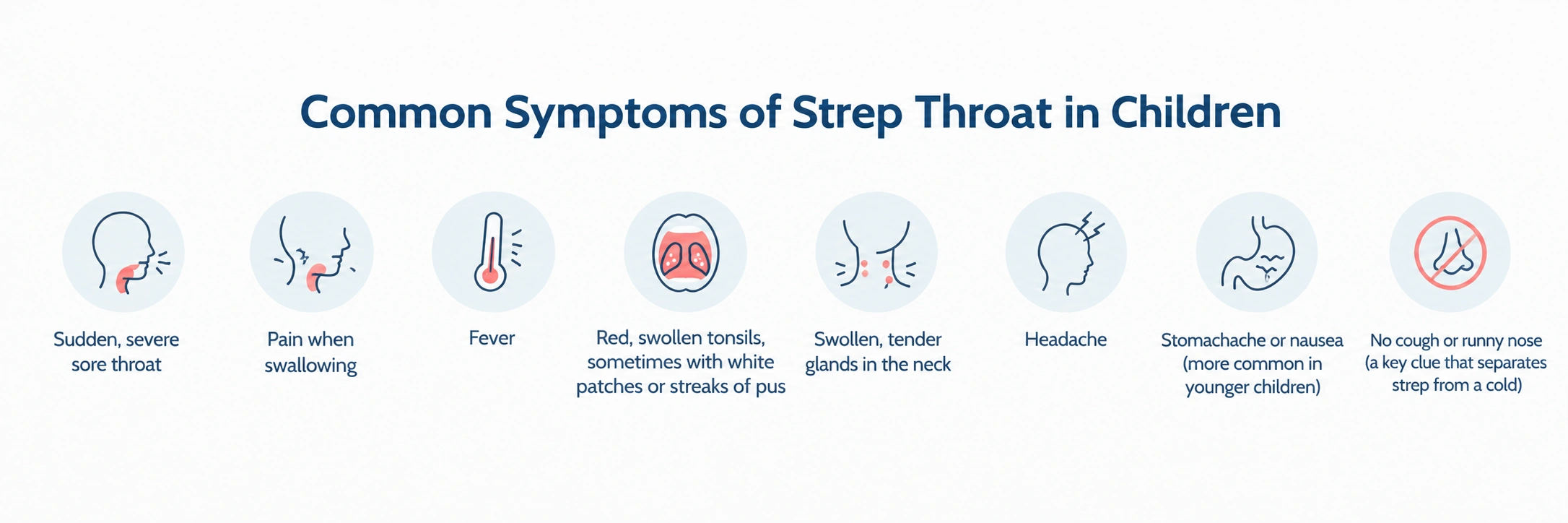
That last point does a lot of work. When a sore throat shows up alongside a cough and congestion, a virus is the more likely cause.
Symptoms overlap, but the pattern is often different. This quick comparison can help you tell them apart before deciding on care:
No chart replaces a test, though. All three can look alike early on, and only a swab confirms whether strep bacteria are behind your child's sore throat.
Diagnosing strep is quick and done right in the clinic. A provider gently swabs the back of the throat and tonsils, which takes only a few seconds. That sample runs through a rapid antigen test, with results ready in roughly 5 to 10 minutes.
If the rapid test is negative but strep still seems likely, a throat culture from a second swab can confirm it, though those results take a couple of days. Testing first matters, since it keeps antibiotics from being used against a virus. You can read more about rapid strep testing and same-day treatment before you visit.
Strep is treated with a course of antibiotics, usually a penicillin-class medication unless your child is allergic. The provider selects the specific one. Most kids start feeling better within a day or two of starting treatment.
Finishing the full course is the step parents most often skip once a child perks up. Stopping early can let the infection return and raises the risk of complications, so keep going until every dose is done, even after symptoms fade.
Comfort care helps your child feel better while the antibiotics do the real work. Offer plenty of fluids, and lean on soft, easy-to-swallow foods like yogurt, applesauce, soup, and smoothies. Warm or cold, whichever they prefer, can soothe a raw throat.
Rest matters too, so let them take it easy. For pain or fever, an age-appropriate children's pain reliever can help, following the dosing on the label or your provider's guidance. These steps support treatment, they don't replace the antibiotics.
Most strep cases are straightforward, but some signs mean your child should be seen promptly. Walk in if a fever runs high or lasts more than a day or two, if swallowing becomes very difficult, or if symptoms haven't eased within 24 to 48 hours of starting antibiotics.
Seek care right away for trouble breathing, drooling or an inability to swallow, or signs of dehydration such as little urination, no tears when crying, or unusual drowsiness. These warrant immediate attention.
Prompt treatment isn't about alarm. Untreated strep can occasionally lead to rheumatic fever, which affects the heart and joints, or kidney inflammation. Those complications are uncommon, and catching strep early with testing and antibiotics is exactly how urgent care providers help prevent them.
Strep spreads easily, but a few habits limit it at home and in the classroom:
Most sore throats in kids are viral and pass on their own. Strep is the exception, and it's the one worth confirming, since it's bacterial, spreads fast, and needs antibiotics to clear. A quick test is the only way to know for sure.
That's where MI Express Urgent Care can help. Walk in to either location in Canton or Ann Arbor, no appointment needed, seven days a week. A provider runs a rapid strep test with results in minutes, and if it's positive, antibiotic treatment starts the same visit.
Without treatment, a child can stay contagious for two to three weeks. Once they start antibiotics, they're generally no longer contagious after about 24 hours, which is why that first day of treatment matters.
Symptoms may ease on their own in a week or so, but skipping antibiotics keeps your child contagious longer and raises the risk of complications like rheumatic fever. Testing and treatment are the safer path.
Usually once they've been on antibiotics for at least 24 hours and have been fever-free without fever-reducing medicine. Check your school's policy, since some ask for a bit longer.
No. Most sore throats are viral and clear on their own. Strep is a bacterial infection that needs antibiotics, and a rapid test is the only reliable way to tell them apart.
Yes. Strep spreads easily within a household through respiratory droplets and shared items. Adults in close contact with a sick child can catch it, though it remains most common in school-age kids.