


Three different problems, one nearly identical feeling: a clogged head, pressure across your face, and a tank running on empty. Allergies, a cold, and a sinus infection are notoriously easy to confuse, and the mix-up costs you, since the remedy that quiets one barely touches the others. Working out which of the three has you down is where real relief starts, and the clues are easier to read than you might think.
The overlap is only skin-deep. Allergies are your immune system misfiring, mistaking something harmless like pollen for a real threat, so they aren't an infection and can't spread. A cold is the work of a virus caught from someone around you, and it spreads the same way. A sinus infection, or sinusitis, is what happens when the sinuses themselves grow inflamed or infected, by a virus or bacteria, usually after a cold or a long allergy flare has left those passages swollen and clogged.
Tracing symptoms back to a likely source narrows things down fast. With allergies, the usual suspects are pollen, dust mites, pet dander, and mold. Colds ride in on viruses spread through coughs, sneezes, and shared surfaces, mostly once the weather cools. Sinus infections tend to be a second act after a cold or a stubborn allergy stretch, and nasal polyps, a deviated septum, or asthma raise the odds by making it easier for the sinuses to clog and stay that way.
If the cause won't reveal itself, look at how the symptoms line up. The overall pattern tends to be more telling than any single complaint:
One caveat, though: mucus color proves nothing on its own, and real cases rarely fit a chart perfectly, so read this as a starting point, not a final call.
When you're still unsure, the clock is a dependable referee. Allergies last as long as you're around whatever sets them off, sometimes weeks or months in a rough pollen run. A cold usually wraps up inside 7 to 10 days. The timeline to watch belongs to sinusitis: symptoms that push past 10 days, or back off and then come roaring back, point to a sinus infection more than a cold dragging its feet.
Several stubborn myths steer people wrong. Top of the list: green or yellow mucus proves a bacterial infection needing antibiotics. It doesn't, since plain viral colds turn mucus colorful too, and color alone is no reason for a prescription. Next, that allergies can't cause facial pressure, when swollen nasal tissue delivers exactly that heavy, blocked ache. And last, that a cold and a sinus infection are the same thing. They're connected, but sinusitis stands on its own and can outlast the cold that kicked it off.
Certain symptoms tip the odds toward a sinus infection rather than its look-alikes. Take them seriously if you notice:
Sinus infections come in two forms. The acute kind is short-lived, easing within a few weeks and usually trailing a cold or allergy flare. Chronic sinusitis is the long-haul version, with symptoms that persist for 12 weeks or more despite treatment. It's more common in people who manage asthma, nasal polyps, or a deviated septum, and it usually calls for more than a walk-in, often a specialist who can investigate why the sinuses stay inflamed.
This is where an accurate diagnosis pays off, since each condition answers to different care. Allergies ease up with antihistamines, nasal sprays, and distance from triggers. A cold asks mainly for rest, fluids, and symptom relief, and antibiotics do nothing against it because no bacteria are involved. Sinusitis is the wild card: a bacterial case may warrant antibiotics, yet plenty resolve on their own, so knowing what you're up against beats guessing whether to wait or treat.
In the early days of any of the three, a few simple measures help while things sort themselves out. Saline rinses clear congestion, plenty of water loosens mucus, and a humidifier keeps nasal passages from drying out. Rest up, and over-the-counter remedies can quiet the worst of it. Treat these as sensible opening moves, not a stand-in for a visit once the warning signs turn up.
A few scenarios are worth more than another day of watchful waiting. Come in if you run into any of these:
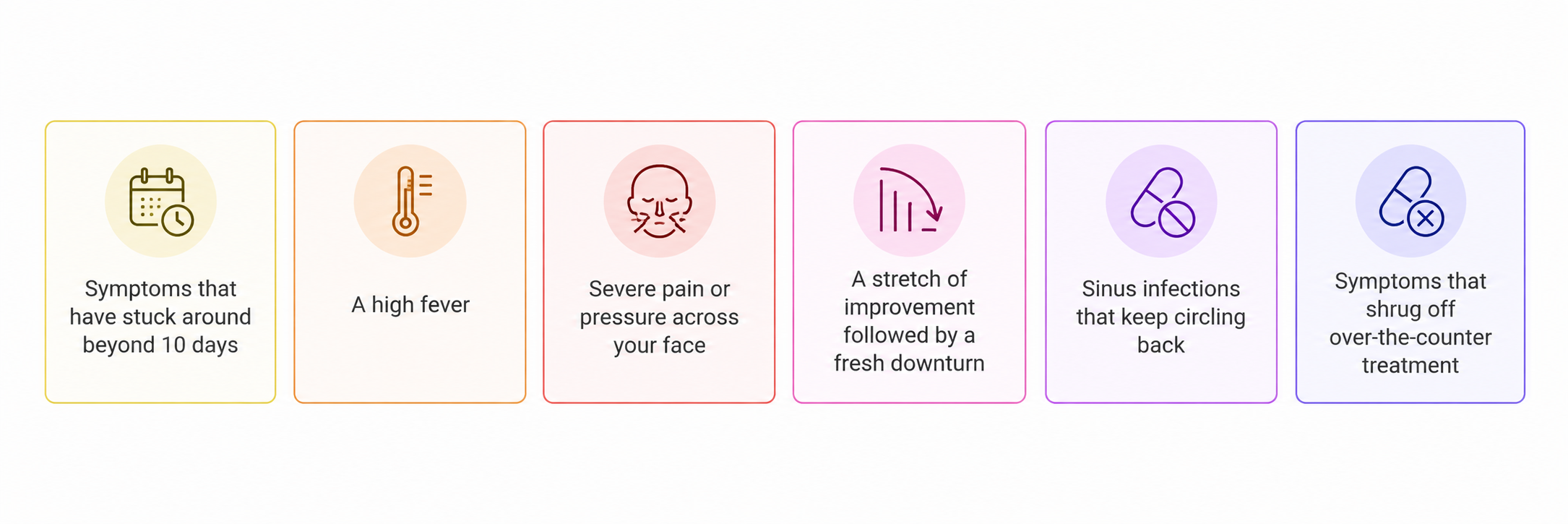
An ordinary cold doesn't need a clinic visit. But when these warning signs stack up, a treatable problem is being left to smolder, and urgent care providers can usually identify which of the three is at work without much delay.
Age changes how the same problem shows up. Little kids often can't put facial pressure into words, so a sinus issue may surface as crankiness, an earache, or restless nights, easy to chalk up to a lingering cold. Adults tend to give the textbook description: pressure and pain over the cheeks, forehead, or eyes. If you're sizing this up for a child, let their behavior tell you as much as their words.
The three conditions borrow one another's symptoms so freely that guessing becomes a coin toss, and the fix for one does little for the next. Naming the actual culprit is what finally moves you from trial and error to something that works.
You don't have to keep guessing at what's dragging you down. Often a brief visit is enough to learn whether allergies, a virus, or a sinus infection is behind it, and to send you home with treatment aimed at the real cause. The team at MI Express Urgent Care takes walk-ins every day at the Canton and Ann Arbor clinics, so come by whenever suits you and trade another week of wondering for a clear answer.
Not directly, but they can pave the way. Allergies aren't an infection, but the swelling and congestion they cause can bottle up the sinuses, creating conditions where one takes hold.
Often, no. A large share of sinus infections are viral and settle on their own. Antibiotics only do something for bacterial ones, so identifying the type first keeps you from taking them for nothing.
Repeat infections usually have something underneath, such as ongoing allergies, nasal polyps, or a deviated septum. When they keep returning, a deeper evaluation, sometimes with a specialist, is the sensible next step.
It can, particularly when the cause is bacterial. Allergies never run a temperature, so a fever alongside your other symptoms is a helpful hint that pollen isn't the whole story.
Watch the timeline and the itch. Allergies drag on, spike with exposure, and come with itchy eyes, while a cold builds over a day or two, clears in about a week, and can bring a fever.
The infection itself generally isn't passed around, but when a virus set it off, that virus can travel to other people the same way a cold does.