


One person in the house is up sick overnight. By the next afternoon, two more have followed. Meanwhile, the friend who shared the same takeout feels fine.
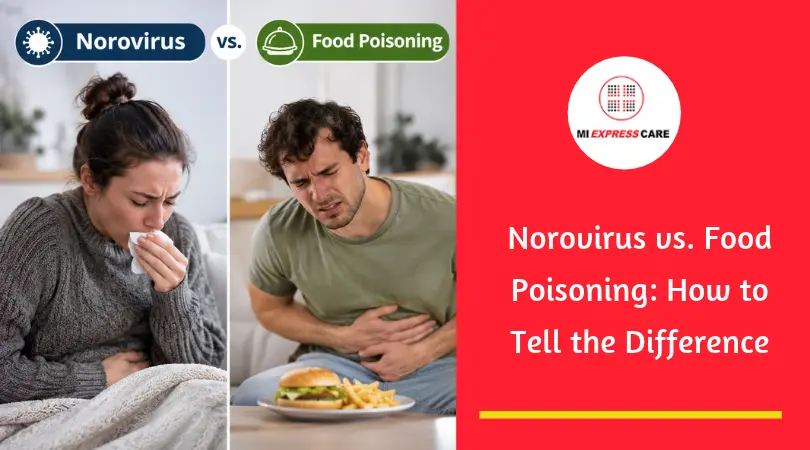
So which is it, norovirus or food poisoning? The norovirus vs. food poisoning question has a twist: norovirus is itself one cause of food poisoning. The real task is reading clues about the source. Stomach bugs spread more in colder months, so those clues are worth knowing now.
Food poisoning is the umbrella term. It means illness from contaminated food or drink, and the culprit can be bacteria, viruses, parasites, or toxins.
Norovirus sits under that umbrella. It is a virus that can contaminate food and cause food poisoning, but it also spreads directly from person to person, through touch and shared surfaces.
You may hear it called the stomach flu, but the nickname misleads. Norovirus is a gut virus that causes vomiting and diarrhea, and it has nothing to do with influenza.
Why does the distinction matter? The cause shapes how the illness spreads at home, how long you stay contagious, and which warning signs deserve a closer look.
For the clinical side, see food poisoning evaluation and treatment.
Here is how norovirus compares with food poisoning in general:
| Feature | Norovirus | Food Poisoning (Any Cause) |
|---|---|---|
| Typical cause | A virus | Bacteria, viruses, parasites, or toxins in food or drink |
| Symptom onset | Usually 12 to 48 hours after exposure | Hours to days, depending on the germ |
| Common symptoms | Vomiting, diarrhea, nausea, stomach pain | Diarrhea, cramps, nausea, vomiting, fever |
| Fever pattern | Often low-grade, with body aches | Can be higher with some bacterial causes |
| How it spreads | Person to person, contaminated food, and surfaces | Usually a contaminated food or drink source |
The two overlap so much because they hit the same system. Nausea, vomiting, diarrhea, and cramps are how the gut reacts, whatever the cause.
A few details help. Norovirus often brings a low-grade fever and body aches, while a high fever or bloody stool points toward a bacterial cause.
Because symptoms alone rarely settle the question, the timing and exposure clues covered next usually tell you more than any single symptom.
Timing and who else is sick often say more than any single symptom. Ask yourself:
Clue 1 points to a shared food source, which can be norovirus or another germ. Clues 2 and 3 lean toward norovirus, which passes easily between people. For a wider comparison, read how food poisoning, Cyclospora, and stomach bugs compare.
Norovirus usually runs its course in 1 to 3 days. Most mild food poisoning clears in about the same time, although some bacterial causes last longer.
Norovirus is contagious, and for longer than most people expect. You can pass it on for a few days after you feel better, sometimes for 2 weeks or more. Food poisoning from a contaminated meal mainly affects the people who ate it.
Stay home from work, school, and food prep until your symptoms are gone, and wait at least 48 hours after they stop before cooking for others.
A few habits limit the spread. Wash your hands with soap and water, since hand sanitizer does not work well against norovirus. Clean surfaces with a bleach-based product, and wash soiled laundry in hot water.
Handle soiled laundry without shaking it, wear gloves if you have them, and use the longest hot wash cycle available.
Stomach Symptoms Not Letting Up? Walk In at Canton or Ann Arbor
Most stomach illnesses settle at home. Plan on being seen if you notice any of these:
Dehydration is the complication that most often turns a stomach bug into a medical problem, because vomiting and diarrhea drain fluids faster than sips of water replace them. Children and older adults can run low quickly.
An urgent care provider can assess your hydration, prescribe anti-nausea medication, and order stool or blood testing when a specific germ is suspected. Parents can find care for a child's stomach illness here.
Go to the ER or call 911 for fainting, confusion, severe belly pain, or a child who is hard to wake.
Wash your hands with soap and water after using the bathroom and before eating or cooking. Do not prepare food while you are sick.
Cook shellfish to an internal temperature of at least 145°F, because quick steaming does not kill norovirus. Poultry needs 165°F.
Clean shared surfaces, such as doorknobs, faucets, and counters, especially after someone in the house has been ill.
A stomach bug can leave you drained and worried, especially when you are also looking after someone else who is sick. The long nights and the not knowing take a toll of their own.
You do not have to work out norovirus vs. food poisoning on your own. If you cannot keep fluids down, you feel dizzy, or something simply feels wrong, that is reason enough to be seen.
When you are ready, walk in to MI Express Urgent & Primary Care in Canton or Ann Arbor. A provider will listen to what you have been going through and help you work out the next step.
Norovirus is one cause of food poisoning, so timing, shared meals, and who else is sick help point to the source.
Most people recover within 1 to 3 days.
Yes. It spreads through contact with an infected person, contaminated food or drink, and surfaces, and you can stay contagious for days after you feel better.
People use the nickname, but norovirus is not related to influenza.
Walk in for dehydration, fluids that will not stay down, a fever above 102°F, bloody vomit or stool, or symptoms lasting more than 3 days.