


Once reserved for hospital rooms and emergency settings, IV therapy has quietly made its way into wellness clinics, recovery lounges, and medical practices across the country. If you've heard people talking about it, or noticed it listed alongside weight loss and primary care services, you might be wondering whether it's worth exploring or just another wellness trend. The honest answer: it depends on who you are and why you're considering it.
Read on for an honest look at what IV therapy does, who it actually helps, and where the evidence is stronger than the marketing.
IV therapy delivers fluids, electrolytes, and vitamins directly into your bloodstream through a small IV line placed in the arm. That direct delivery is the key advantage: because it bypasses the digestive system entirely, absorption is immediate. When you swallow a vitamin supplement or drink a sports drink, your gut determines how much actually gets absorbed, and for many people and many nutrients, that rate is limited. With IV delivery, what goes in circulates right away.
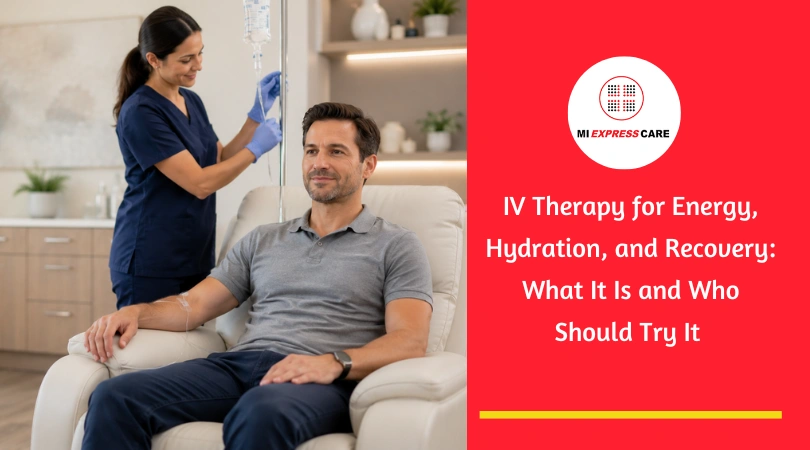
A typical session takes 30 to 45 minutes. You sit in a comfortable chair while a drip bag administers the solution, with a trained staff member monitoring the process from start to finish.
The base of most IV formulations is a saline or electrolyte-balanced fluid, the hydration foundation. From there, providers add ingredients based on the intended purpose. Common additions include:
You may also see named "blends" like the Myers' Cocktail, a commonly referenced combination of magnesium, B vitamins, vitamin C, and calcium. These aren't proprietary cures, they're simply standardized formulations with a longer track record of clinical use.

This is the use case with the strongest and most direct medical rationale. If you're dealing with vomiting, diarrhea, heavy sweating from heat exposure, or any other situation that has left you unable to keep fluids down or significantly depleted, IV fluids can restore hydration and electrolyte balance faster than oral intake alone.
After intense or prolonged exercise, the body's electrolyte balance is disrupted and fluid losses can be significant. IV rehydration helps restore that balance more quickly than drinking fluids, which can be useful when recovery time matters or when GI discomfort makes oral intake difficult.
Alcohol consumption leads to dehydration and electrolyte loss, which drive many hangover symptoms, headache, fatigue, nausea. IV rehydration can ease those symptoms meaningfully. It won't reverse alcohol's other physiological effects, but for the dehydration component specifically, it works.
Long flights are dehydrating by nature, and disrupted routines compound the fatigue. For frequent travelers or those managing a demanding schedule around travel, IV therapy can help restore baseline hydration and support quicker recovery.
For individuals with a confirmed deficiency, low B12, for example, IV delivery is a legitimate clinical option, not just a wellness add-on. When oral supplementation isn't absorbing adequately, bypassing the digestive system can make a measurable difference.
During and after a cold, flu, or stomach bug, supportive hydration and electrolyte balance can help the body recover more comfortably. IV therapy is not a treatment for the illness itself, but it can make the recovery period more manageable.
This is the most widely marketed use case, and the one where expectations should be set carefully. Some people report feeling more energized or clearer after a session, and for those who are mildly depleted or not absorbing nutrients well, that response is real. But if you're otherwise healthy and well-nourished, the effects are likely to be modest. It can be a useful periodic addition to a wellness routine, but it shouldn't substitute for sleep, nutrition, or addressing any underlying health issues.
For dehydration, electrolyte loss, and confirmed deficiencies, yes, it works well. These are the situations it was built for, and the results are reliable.
For bigger claims like immune boosting, anti-aging, or curing a hangover? The evidence is thinner. IV therapy can support recovery, but it can't fix an underlying health problem. If you're dealing with ongoing fatigue, low energy, or symptoms that won't go away, those need a proper diagnosis, not a drip.
IV therapy isn't right for everyone. Talk to a provider before your first session if you have:
A brief health screening before treatment is standard practice at reputable providers, not a formality, but an important safety step.
The process is straightforward. You'll complete a short intake and health screening before the session begins. A staff member places a small IV line, usually in the forearm or hand, and connects the drip bag. The infusion runs over 30 to 45 minutes while you rest comfortably.
Common sensations include a cool feeling at the IV site and occasionally mild lightheadedness when standing up after. Both are normal and typically brief. There's no significant downtime afterward, continue hydrating normally and resume your regular activities.
IV therapy is most clearly useful for dehydration, recovery, and situations involving confirmed nutritional deficiencies. For athletes, people recovering from illness, travelers, and anyone who has had a rough night, the benefits are grounded in solid physiological rationale. For general energy and wellness use, it can be a worthwhile periodic option, just go in with accurate expectations rather than expecting a dramatic transformation.
If you're curious whether it's a good fit for you, the best first step is a conversation with a medical provider who can look at your health history and help you decide.
IV therapy is one of the most direct ways to give your body what it needs, fast. Whether you're recovering from illness, pushing through a demanding schedule, or simply running low, the right fluids and nutrients delivered straight to your bloodstream can make a real difference in how quickly you bounce back.
At MI Express Urgent & Primary Care, IV therapy is administered by trained medical staff in a comfortable, clinical setting, with formulations tailored to what your body actually needs, not a one-size-fits-all bag.
Ready to feel better, faster? Schedule your appointment today and explore IV hydration therapy in Canton and Ann Arbor, MI.
For most healthy adults, once or twice a month is reasonable for wellness use, while your provider can recommend a frequency based on your individual health needs.
IV therapy can relieve dehydration-related hangover symptoms like headache, nausea, and fatigue, but it cannot reverse alcohol's other effects on the body.
Wellness-focused IV therapy is generally not covered by insurance, though medically necessary treatments for diagnosed deficiencies may be covered in some cases.
The effects typically last anywhere from a few days to a week, depending on the formulation and your hydration status and individual needs.