


Healthcare is evolving, and virtual care has emerged as a convenient, reliable option for many patients. Busy schedules, transportation challenges, and long wait times can all delay essential care, but technology is bridging the gap. Virtual healthcare, also known as telemedicine or telehealth, allows patients to access medical services from the comfort of their own homes. With secure and easy-to-use platforms, medical care is becoming more accessible than ever. With secure, easy-to-use platforms, accessing healthcare has never been more convenient.
From managing minor illnesses to checking in on chronic conditions, virtual healthcare removes common barriers and puts care within reach for everyone, regardless of location or schedule.
Let’s take a closer look at how virtual healthcare is reshaping access to care.
Virtual healthcare refers to medical services delivered remotely using video calls, phone consultations, or mobile applications. Telemedicine appointments take place on secure, HIPAA-compliant platforms, ensuring patient privacy while providing real-time care.
While some might think virtual visits are limited, technology in healthcare has advanced to support a wide range of services:
Primary Care Follow-ups: Managing ongoing health goals.
Minor Illness Consultations: Addressing sudden symptoms like coughs or rashes.
Medication Management: Reviewing and renewing prescriptions.
Chronic Disease Check-ins: Monitoring conditions like hypertension or diabetes.
Mental Health Support: Providing a private space for therapy and counseling.
Accessible healthcare is critical for maintaining health and preventing complications. Unfortunately, many people face barriers that make it difficult to get timely care:
Transportation limitations: Not everyone has access to a reliable vehicle or public transit.
Busy schedules: Work, school, or caregiving responsibilities can make attending appointments difficult.
Geographic challenges: Rural and underserved areas often have fewer healthcare providers.
When healthcare isn’t easily accessible, patients may delay care, which can worsen medical conditions. Virtual healthcare helps address these issues by providing flexible options that fit into patients’ lives.
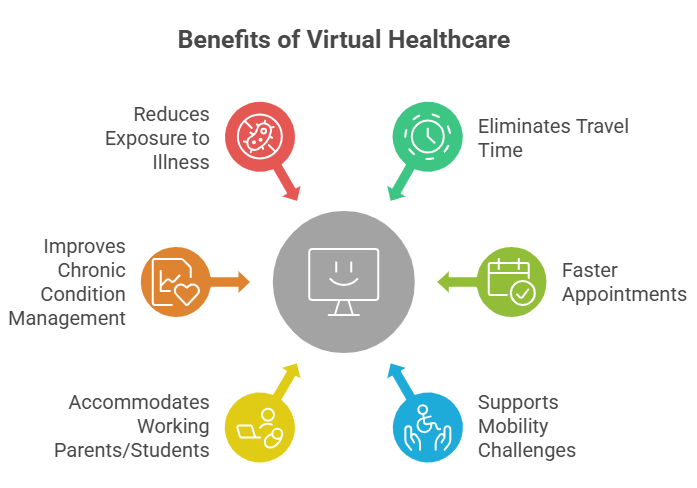
Virtual visits remove the need to commute to an office, saving time and effort. Whether a patient lives in a busy city or a remote area, care can now happen anywhere, perfect during heavy traffic, bad weather, or hectic days.
Scheduling virtual appointments is often quicker, especially for minor concerns. Instead of waiting weeks for an in-person visit, patients can sometimes connect with a provider within 24–48 hours, ensuring care when it’s needed most.
Seniors, people with chronic pain, or immunocompromised individuals benefit greatly from virtual care. Receiving treatment from home reduces physical strain and exposure to contagious illnesses.
Virtual healthcare allows parents and students to receive medical attention without missing an entire workday or class. Quick evaluations or check-ins mean less disruption to daily life.
Consistent monitoring is key for managing chronic diseases. Virtual check-ins for diabetes, hypertension, and weight management help patients stay on track, identify potential issues early, and maintain healthier outcomes.
Avoiding crowded waiting rooms lowers the risk of catching or spreading contagious illnesses, like colds, flu, or RSV. This is especially important for vulnerable patients or those with weakened immune systems.
Virtual visits are well-suited for a wide range of health concerns, including:
Seasonal allergies
Skin rashes and mild infections
Minor urinary tract infections or sinus infections
Medication refills and adjustments
Routine follow-up consultations
While virtual care covers many conditions, some situations require an in-person evaluation for accurate diagnosis and treatment.
Certain medical concerns require hands-on attention. Patients should seek in-person care for:
Severe chest pain or suspected heart issues
Difficulty breathing or shortness of breath
High fever or persistent vomiting
Injuries needing imaging, stitches, or urgent interventions
Lab tests, vaccinations, or comprehensive physical exams
Understanding when to transition from virtual to in-person care ensures safety and helps build trust between patients and providers.
Patient safety and privacy are top priorities. Virtual healthcare platforms are HIPAA-compliant, meaning consultations are private and encrypted. Patients can confidently share medical information, knowing that personal health data is protected.
The growth of telehealth is transforming the healthcare landscape. As technology advances, virtual care is increasingly integrated with primary care, urgent care, and specialty services. Insurance coverage is expanding for virtual visits, and mobile healthcare services are making care more convenient than ever. In the coming years, telemedicine services will continue to improve accessibility, efficiency, and overall patient experience.
Getting medical care shouldn’t feel like a chore. Virtual healthcare makes it easy to connect with your doctor from wherever you are, home, office, or anywhere in between. Whether it’s a quick check-in, a follow-up for a chronic condition, or advice on a new symptom, telemedicine puts convenience, safety, and simplicity first. By removing traditional barriers, it gives you more control over your health, making wellness not just a priority, but a seamless part of your everyday life.
Long drives, packed waiting rooms, and schedule juggling can delay the care you need. At MI Express Primary Care, virtual visits make it simple to connect with a provider quickly and securely from wherever you are. Convenient, reliable care is just a click away.
Schedule your virtual appointment today and experience healthcare that fits your life.
For many minor illnesses, follow-ups, and chronic condition check-ins, virtual healthcare is highly effective, offering timely evaluation, treatment guidance, and personalized care remotely.
A smartphone, tablet, or computer with a camera, microphone, and stable internet connection is typically all you need for a smooth virtual appointment.
Most major insurance plans cover virtual healthcare visits, though coverage may vary. It’s best to confirm benefits and any copays with your insurance provider beforehand.
When medically appropriate, providers can prescribe medications during a virtual visit and send prescriptions directly to your preferred pharmacy for convenient pickup.
If the healthcare provider determines additional testing, imaging, or lab work is needed, you’ll receive clear guidance on scheduling in-person care or diagnostic services promptly.