



The flu shot is an annual vaccine that lowers your risk of getting the flu and of serious complications if you do. CDC says September or October is the ideal time for most people to get vaccinated, and vaccination continues through the season while flu viruses are circulating.
For 2026-2027, the vaccine was reformulated. All three virus components changed from last season, so last year's shot does not carry over.
Flu shots are recommended for everyone 6 months and older, take only minutes, and are available on a walk-in basis near Canton and Ann Arbor.
All three virus components in this year's flu vaccine changed from last season. That includes an update aimed at the H3N2 subclade K virus, which spread widely during the 2025-2026 season.
In plain terms, last year's vaccine was built for last year's viruses. This year's version is updated to match the strains experts expect to be most common, which is why you need a new dose even if you were vaccinated last fall.
Flu viruses shift every year, and that is exactly why protection is annual.
CDC kept its existing flu vaccine recommendations in place for the 2026-2027 season. Major medical groups, including family physicians, pediatricians, and infectious disease specialists, also recommend the shot for everyone 6 months and older.
The best time to get a flu shot is September through October, ideally before Halloween. Getting it early means you are protected before flu viruses start circulating widely.
How long does a flu shot take to work? Protection takes up to 14 days to build, so earlier beats later. A shot in mid-October is typically in place well before the January and February peak.
Missed the window? Flu activity typically peaks from January through February, so a shot in November or December still helps. CDC says vaccination should continue throughout the season while flu viruses are circulating.
Parents, note that some young children getting vaccinated for the first time need two doses spaced weeks apart. Starting early gives them time to finish the series before flu season peaks.
Nearly everyone benefits from a flu shot. Here is how it breaks down:
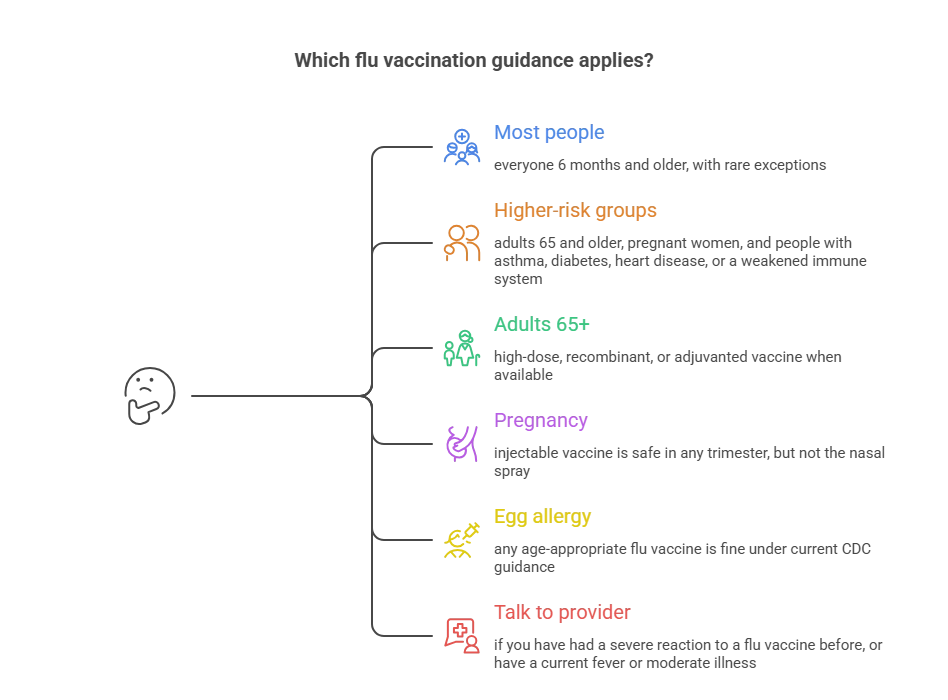
Not sure which vaccine fits you? A provider can help match it to your age and health at your visit.
Most people are in and out in minutes, and side effects tend to be mild. Here is what the visit and the days after look like:
Flu season is close, and the best move is getting vaccinated before it peaks. A quick walk-in visit now covers you for the months ahead.
Visit us at MI Express Urgent & Primary Care for your flu shot, no appointment needed. Hours and directions are on the Canton urgent care and Ann Arbor urgent care pages.
No. Flu activity typically peaks January through February, so a shot in November or December still helps. CDC says vaccination should continue while flu viruses are circulating.
Protection starts about 14 days after the shot and typically covers the rest of the flu season. You need a new shot each year because the vaccine is updated.
Yes. CDC says people with an egg allergy can receive any age-appropriate flu vaccine. If you have had a severe reaction to a flu vaccine before, talk to a provider first.
No. Walk-ins are welcome at both locations, seven days a week. Reserving your spot online can reduce your wait.
A flu shot here costs $25 at both the Canton and Ann Arbor locations.