


You wake up with a pounding head, sore muscles, and a forehead that feels warm. The to-do list says work, school, errands, and pushing through feels like the responsible call.
The next day or two matter more than they seem. They shape how well treatment can work and how many people around you get exposed. Knowing what early flu symptoms look like, when to stay home, and which signs call for a visit makes those first hours easier to handle.
After exposure, flu symptoms usually appear within 1 to 4 days, and about 2 days is average. The start is often abrupt. You can feel fine at breakfast and flattened by dinner.
That sudden onset is one of the first signs of flu that sets it apart from a cold, which tends to creep in over several days, usually with a scratchy throat and a stuffy nose.
Flu symptoms day by day tend to follow a rhythm. Fever, aches, and exhaustion usually lead in the first couple of days. Cough, sore throat, and congestion often take over as the fever fades.
How long are flu symptoms likely to last? Most people recover in less than two weeks, though a cough and tiredness can hang around longer.
You can also spread the virus before you feel sick. Most healthy adults are contagious from 1 day before symptoms start to 5 to 7 days after. Children and people with weakened immune systems can stay contagious even longer.
That head start is why acting early protects the people around you as much as it helps you.
Flu usually shows up as a cluster, not a single complaint. Watch for several of these at once:
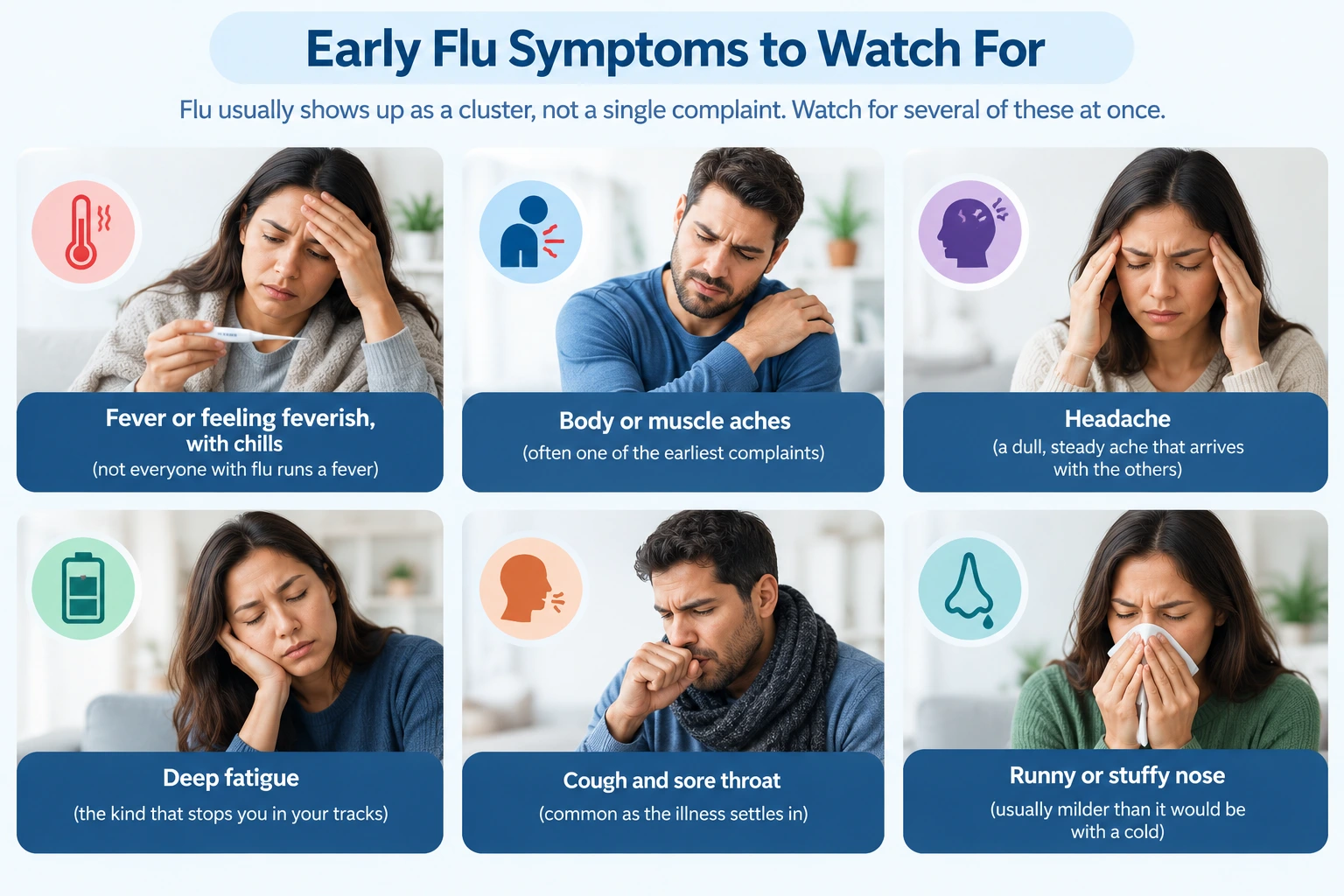
Symptoms alone cannot confirm flu, because COVID-19 and other viruses look similar. A test settles it, including COVID-19 testing when that is the question.
Still unsure whether this is a cold, the flu, or bronchitis? [Link to the cold vs. flu vs. bronchitis post once it is live.]
Anyone can get seriously ill from flu, but some groups face more risk. That includes adults 65 and older, pregnant women, young children, and people with asthma, diabetes, heart disease, or a weakened immune system.
Complications can include pneumonia, ear and sinus infections, dehydration, and flare-ups of chronic conditions. The same virus that gives one person a rough week can push another into a serious setback.
Antiviral medicine works best when it is started within about 48 hours of your first symptoms. That window is the reason early action counts.
A late start is not a reason to skip care. Antivirals can still help people who are very sick after the window has passed.
Higher-risk patients also do not need a positive test first. CDC says a positive flu test is not required for a provider to prescribe an antiviral to someone at higher risk.
For many healthy adults, waiting it out is a fair choice. If you are in a higher-risk group, it is not, so do not wait.
The rule is simple: stay home until you have been fever-free for 24 hours without fever-reducing medicine such as acetaminophen or ibuprofen. Those medicines can hide a fever that is still there.
Feeling better is not the same as being done spreading the virus. Return to work, school, and activities gradually, and give yourself a lighter first day back.
At home, keep your distance from higher-risk family members, cover your coughs, and wash your hands often. If someone in the house is 65 or older, pregnant, or living with a chronic condition, that distance matters most.
For comfort, rest, drink plenty of fluids, and use over-the-counter acetaminophen or ibuprofen as the label directs. Aspirin is for adults only and should never be given to children. Dosing depends on age and weight, so check the label or ask a provider.
Everyone else in the house can lower their own risk with a flu shot.
Most flu cases can be handled at home, some are best checked at urgent care, and a few belong in the emergency room. This table sorts out which is which.
Routine flu symptoms do not belong on the emergency list. These do:
Adult warning signs:
Child warning signs:
Spot the sudden symptoms early, and stay home until you have been fever-free for 24 hours. If you are at higher risk or notice a warning sign, do not wait.
If you are feeling off or just want answers, walk in to MI Express Urgent & Primary Care in Canton or Ann Arbor. We are open seven days a week.
Usually within 1 to 4 days, with an average of about 2 days.
Most healthy adults can spread the flu from 1 day before symptoms start to 5 to 7 days after. Children and people with weakened immune systems can stay contagious longer.
Yes. Antivirals work best within about 48 hours, but they can still help people who are very sick after that point. A late start is not a reason to skip care.
Not until you have been fever-free for 24 hours without fever-reducing medicine. Even mild flu can spread to coworkers.
Usually you cannot, because the two overlap. A test is the way to know for sure, and you can walk in for one.