


Joint pain can make even simple daily activities feel exhausting. Whether it’s knee pain that limits walking, shoulder stiffness that affects sleep, or a sports injury that just won’t heal, many people reach a point where rest, medications, and physical therapy no longer seem enough.
That’s where Platelet-Rich Plasma (PRP) therapy has gained attention. Often described as a “natural healing” treatment, PRP is increasingly used for joint pain, tendon injuries, and arthritis.
But the big question remains: Does PRP therapy actually work, or is it just another medical trend?
Let’s explore how PRP works, what the science says, and who benefits most from this regenerative treatment.
Platelet-Rich Plasma (PRP) therapy is a form of regenerative medicine. It uses a concentrated dose of your own blood to accelerate healing in damaged tissues.
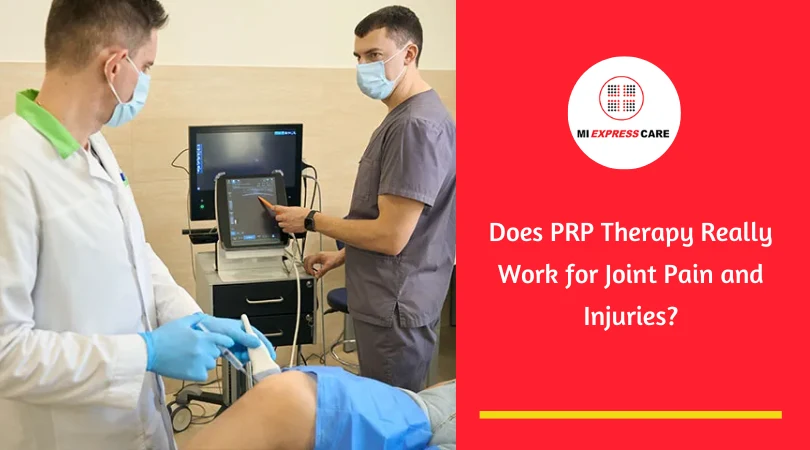
The process is straightforward: a small amount of your blood is drawn and placed in a centrifuge. This machine spins the blood at high speeds to separate the plasma from the red blood cells, concentrating the platelets. These platelets are "healing powerhouses" packed with growth factors that signal your body to repair cells and produce new, healthy tissue.
Unlike traditional pain management, which often focuses on masking symptoms, PRP therapy aims to address the root cause of the pain.
Tissue Repair: Growth factors stimulate the repair of tendons, ligaments, and cartilage.
Reduced Inflammation: PRP can alter the "chemical environment" of a joint, turning down the dial on chronic inflammation.
Healing vs. Masking: While a steroid shot may provide instant relief by numbing inflammation, it can actually weaken tissues over time. PRP, conversely, promotes a biological healing response.
PRP is most effective for "wear and tear" injuries and chronic conditions where the body’s natural healing process has stalled. When joint or soft tissue problems are addressed early, treatments like PRP can support better healing and help prevent the condition from worsening over time—especially in cases of ongoing inflammation or repeated stress on the joint.
Common targets include:
Osteoarthritis: Particularly in the knee, hip, and ankle.
Tendonitis: Such as Tennis Elbow or Achilles tendonitis.
Ligament Sprains: Chronic strains that haven't responded to rest.
Rotator Cuff Tears: Helping to knit together small tears in the shoulder.
The short answer is: Yes, but it depends on the condition. Clinical evidence is strongest for knee osteoarthritis and chronic tendon injuries. Research suggests that PRP often outperforms hyaluronic acid and placebo injections in reducing pain and improving function. However, results can vary based on the severity of the injury, early-to-moderate arthritis typically responds much better than "bone-on-bone" cases.
Why choose PRP over standard care?
Safety: Because it uses your own blood, there is virtually zero risk of allergic reaction or rejection.
Minimally Invasive: It is a needle-based procedure, meaning no scalpels, no scarring, and no general anesthesia.
Long-term Improvement: While steroid injections often wear off after a few weeks, the PRP injection benefits are cumulative, often leading to sustained improvement for months.
A typical PRP session takes about 45 to 60 minutes. After the injection, you might feel a temporary increase in soreness, this is actually a good sign, as it indicates the inflammatory healing process has been "re-started."
Typical Recovery Timeline:
Days 1–3: Rest and icing the area.
Weeks 2–4: Gradual return to activity; beginning of the "healing phase."
Weeks 6–12: This is usually when patients notice significant pain reduction.
Have chronic joint or tendon pain
Want to avoid surgery
Have early-stage arthritis
Haven’t improved with physical therapy or medications
Want a natural treatment option
Severe joint degeneration
Active infections
Certain blood disorders
Advanced arthritis requiring surgery.
A proper evaluation, imaging, and medical history review are essential before starting treatment.
Results vary based on the condition and patient health, but many people experience relief lasting 6 to 12 months or longer.
Some patients benefit from:
Healthy lifestyle choices and physical therapy can help extend results.
PRP is considered very safe. Common side effects include:
Because no synthetic medications are used, serious complications are rare.
In many cases, yes.
PRP can help delay or prevent surgery for:
However, severe joint damage or complete tears may still require surgical intervention. Early treatment often leads to the best outcomes.
While results vary, PRP has become a trusted option for people seeking natural healing without the risks of surgery.
So, does PRP therapy really work?
For the right patient, yes. PRP is a science-backed, minimally invasive treatment that helps the body heal itself. It’s especially effective for joint pain, tendon injuries, and early arthritis when used at the right time.
If you’re struggling with persistent pain and want to explore non-surgical solutions, PRP therapy may be worth considering after a professional evaluation.
Skip the temporary fixes and discover a regenerative approach to joint pain relief that works with your body, not against it. At MI Express Urgent & Primary Care, our expert team uses advanced treatment options like PRP therapy to support natural healing, reduce pain, and help you move forward with confidence.
Schedule a consultation today.
PRP therapy stimulates tissue healing at a cellular level, while physical therapy and rest mainly support recovery without directly repairing damaged tissue.
Most patients experience mild discomfort or pressure during injection, followed by temporary soreness that usually resolves within a few days.
PRP therapy is often combined with physical therapy to improve healing, restore strength, and enhance long-term recovery outcomes.
Patients should avoid anti-inflammatory medications, strenuous activity, and excessive joint stress before and after treatment to support healing.
Results vary by condition, but many patients experience long-lasting improvement, especially when combined with proper rehabilitation and lifestyle modifications.