



Fall is when colds, the flu, and the lingering chest coughs that follow them all start circulating at once. Each can bring a cough, fatigue, and a stuffy head, so telling them apart by symptoms alone is harder than it sounds.
That matters because the right next step differs for each one. A wrong guess can mean waiting too long on something that needs care, or worrying over something that only needs rest. A clear way to sort your symptoms, and to know when to be seen, is laid out below.
Start with the cause. A cold comes from any of several different viruses and is usually milder, building gradually. Only influenza viruses cause the flu, which is usually more intense and often starts abruptly.
Acute bronchitis, often called a chest cold, works differently. The airways swell and make mucus, and that drives the cough. It usually follows a cold or the flu, and it is usually viral.
That is the core difference between a cold, the flu, and bronchitis. It is also the catch: the three overlap, and symptoms alone cannot always tell them apart. Flu needs a test to confirm.
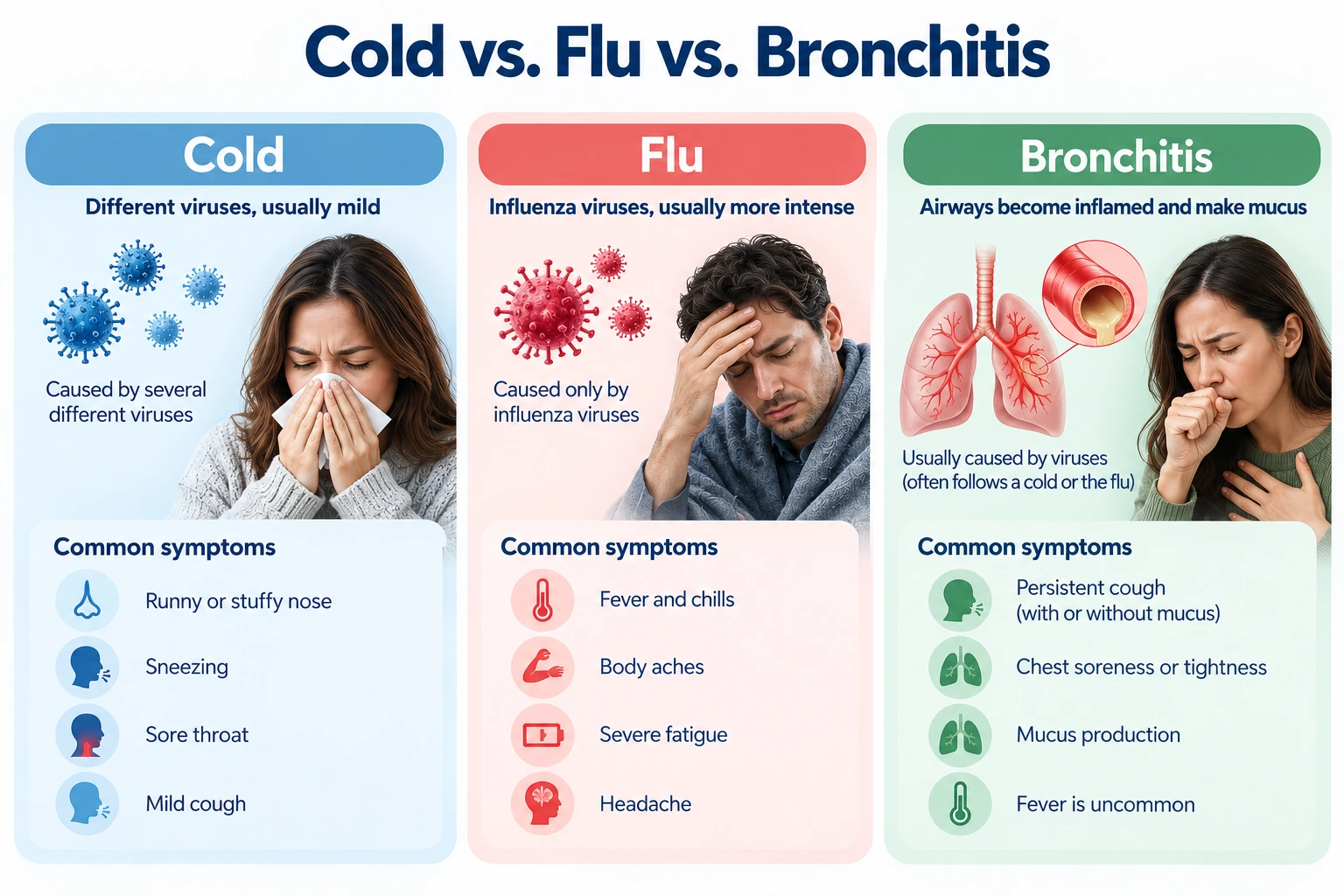
This side-by-side view covers cold vs flu symptoms, plus how bronchitis vs cold and bronchitis vs flu compare.
This table is general guidance, not a diagnosis.
Wondering how to tell if you have the flu? Run through these five questions:
COVID-19 can look the same as all three, and COVID-19 testing is how you tell it apart.
Pneumonia and whooping cough can look like bronchitis, and those usually do call for antibiotics. That is the main reason a lingering cough deserves a look instead of a shrug.
Asthma flare-ups can also mimic or follow a chest cold, so a cough that keeps coming back may call for asthma care rather than more waiting.
A chest exam, and an X-ray when needed, can separate these conditions. With on-site X-ray, that step does not need a second stop, and pneumonia treatment can begin if that is what turns up.
Most colds and mild bouts of bronchitis ease up at home. When to go to urgent care for flu, or for a cough that will not quit, comes down to a few clear signals.
Walk in to urgent care if:
Emergencies are uncommon, but these signs mean skipping the walk-in visit:
Go to the ER or call 911 if:
A visit starts with a symptom review and an exam. Testing follows when the result would change the plan, such as for flu, COVID-19, or strep. You can read more about lab services and rapid strep testing.
You may not leave with an antibiotic. Most bronchitis is viral, and antibiotics do not help viruses.
If flu is confirmed or likely and the timing allows, an antiviral is the medicine that can help. You will also leave with a clear plan for what to watch for and when to come back.
Rest, plenty of fluids, and a humidifier or steamy shower can ease a sore, tight chest.
For fever and aches, over-the-counter acetaminophen or ibuprofen can help. Aspirin is for adults only, never children. Dosing depends on age and weight, so check the label or ask a provider.
Stay home while you have a fever, and cover your coughs. If throat pain is part of the picture, sore throat and URI treatment has more.
A cold creeps in, the flu hits fast, and bronchitis settles in your chest, often after one of the other two. Symptoms past 3 weeks, bloody mucus, a relapse, or flu in a higher-risk person mean it is time to be seen.
Walk in to MI Express Urgent & Primary Care in Canton or Ann Arbor, open seven days a week. To avoid half of this puzzle next time, a flu shot is a good place to start.
A cold usually clears in about a week, and the flu in less than 2 weeks. Acute bronchitis lasts under 3 weeks, though the cough can linger.
Usually not. Most bronchitis is viral, and antibiotics do not help viruses. A provider may prescribe one if your exam points to pneumonia or whooping cough instead.
Ideally within about 48 hours of your first symptoms if you are 65 or older, pregnant, have a condition like asthma, diabetes, or heart disease, or if a child is sick. Antivirals work best in that window.
Yes. COVID-19 can look like a cold, the flu, or bronchitis, and symptoms alone cannot tell them apart. A test can.
A cough can linger after other symptoms fade, but acute bronchitis itself lasts under 3 weeks. If your cough goes past 3 weeks, keeps coming back, or brings up blood, walk in to be checked.